
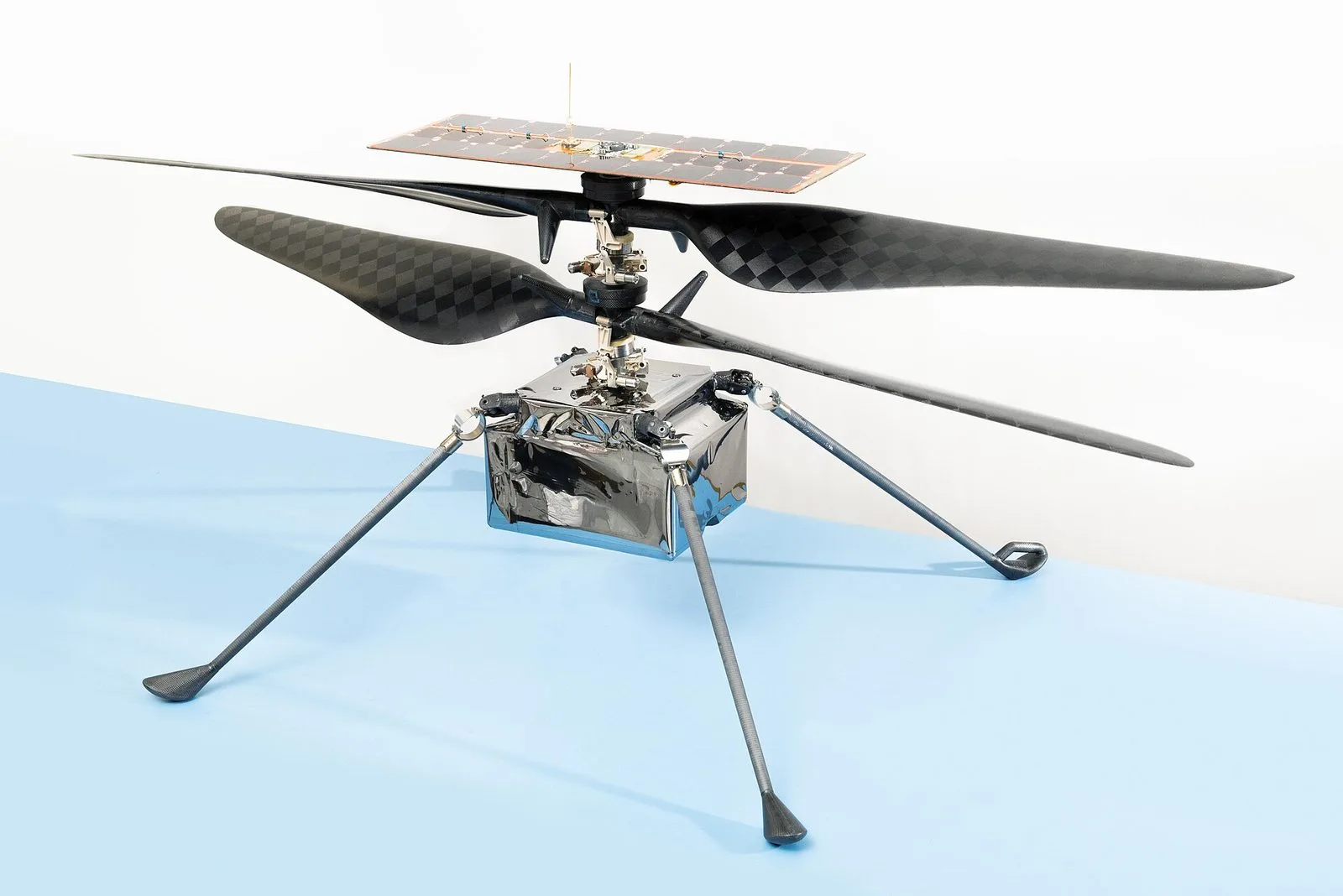
The smallest solar vehicle on our site may also be the most famous. Ingenuity was a helicopter of about 1.8 kg that rode to Mars under the belly of the Perseverance rover. On 19 April 2021 it became the first powered aircraft to fly on another planet. NASA called it its “Wright brothers moment“.
Flying on Mars is hard: the air is only about 1% as dense as on Earth. Ingenuity’s two counter-rotating rotors therefore spin very fast. Its energy came from the sun: a solar panel of 42.5 × 16.5 cm on top of the rotor mast charged six Sony lithium-ion cells with about 35–40 Wh. That is about a hundredth of a typical e-bike battery, yet enough for flights of up to about two and a half minutes. Flight time was limited not by the battery but by heat: in the thin air the motors warmed up by about 1 °C per second.
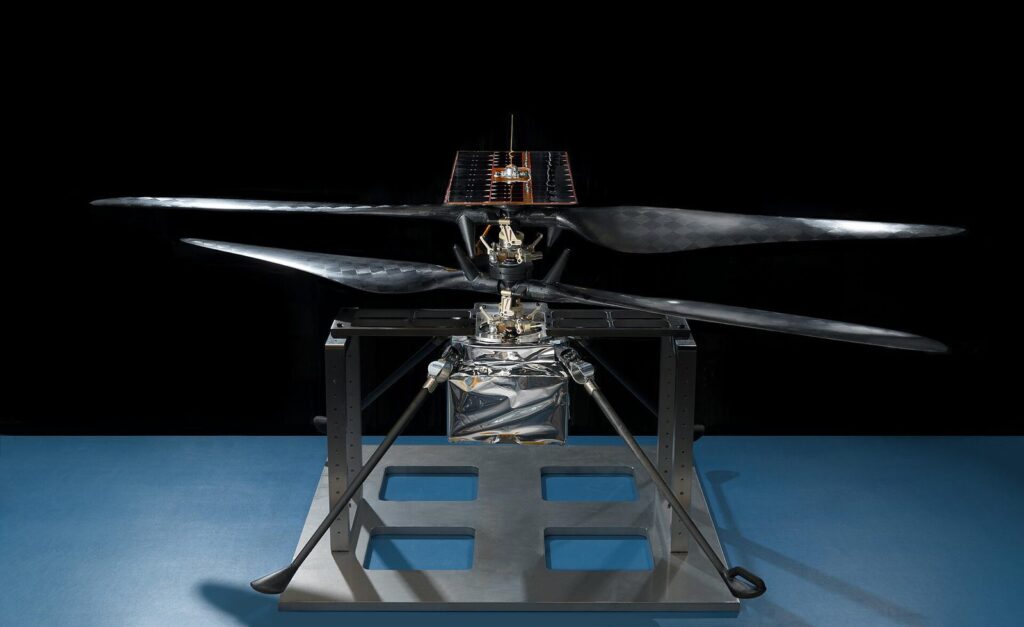
Ingenuity was supposed to make five flights in a 30-day test. It made 72 over almost three years. It scouted routes for Perseverance and often flew ahead of the rover. In the Martian winter of 2022 there was so little solar energy that the helicopter shut down completely every night and had to wake itself up in the morning, and it worked. On 18 January 2024, during flight 72, the rotor blades were damaged on landing over featureless sand, and the mission ended. In total Ingenuity flew 2 hours, 8 minutes and 48 seconds over 1,004 days and covered more than 17 km.
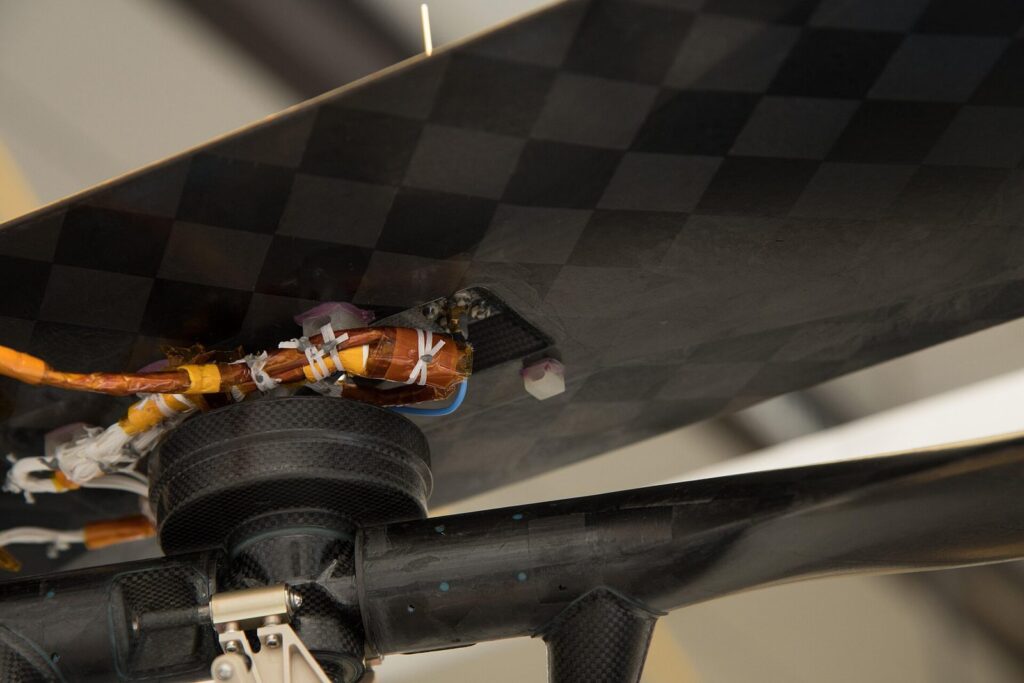
A small piece of muslin from the 1903 Wright Flyer is attached to a cable under its solar panel. Ingenuity continues the line of solar explorers on our site: Sojourner, Spirit, Opportunity and the Soviet Lunokhod rovers.
Technical data
| Builder | NASA JPL (USA) |
|---|---|
| Mission | Mars 2020, carried by the Perseverance rover |
| Mass | ~1.8 kg |
| Solar | Panel 425 × 165 mm on the rotor mast |
| Battery | 6 Sony Li-ion cells, ~35–40 Wh |
| First flight | 19 April 2021, Jezero crater (first powered flight on another planet) |
| Total | 72 flights, 2 h 8 min 48 s, >17 km, 1,004 days |
| End | 18 January 2024 (rotor damage on flight 72) |
Photos
- Top photo: NASA/JPL-Caltech / Wikimedia Commons, Public domain
- The flight model during testing at JPL in February 2019. Photo: NASA/JPL / Wikimedia Commons, Public domain
- A small piece of fabric from the Wright brothers' 1903 Flyer… Photo: NASA / Wikimedia Commons, Public domain
Sources
Keep exploringMore solar projects
 PlanesSunseeker II – First Solar Plane Across the Alps
 BoatsSolifleur – One of the First Solar Passenger Boats
 Planesicaré 2 – The Solar Glider from Stuttgart
 PlanesSolar Riser – The First Human Flight on Solar Power (1979)
 2 WheelsSola.Bike 2 person bike with solar roof
 BoatsFährBär – Berlin’s Solar Ferries
 5+ WheelsSojourner – The First Solar Rover on Mars
 Trailerthe Tin Tent
 3 WheelsTokai Challenger – 100 km/h Across Australia on Sunlight
 TrailerSolarTrails
 3 WheelsStanford Luminos – 10,000 Safe Miles and 4th in the World
 4 WheelsVenturi Eclectic – The Sun-and-Wind City Car from Monaco
 4 WheelsToyota RaRa II – A Solar Car Built to Lead Marathons
 BoatsAditya – India’s First Solar Ferry
 BoatsWayward Sun – A Father and Son’s Solar Voyage to Alaska
 3 WheelsMidnight Sun – Waterloo’s Solar Cars and a 15,070 km Record
 PlanesNASA Centurion – The 63-Metre Step Between Pathfinder and Helios
 BoatsMobiCat – Switzerland’s Big Solar Lake Catamaran
 4 WheelsMaize & Blue – Michigan’s 1993 National Champion
 BoatsSolar Sailor – The Ferry with Solar Wings
 4 WheelsSquad Solar City Car – A Solar Microcar for Everyday Errands
 4 WheelsGreen Lightning & Green Thunder – Top Dutch Solar Racing
 BoatsOrca ten Broke – Berlin’s Solar Seminar Ship
 BoatsGalilée & Copernic – La Rochelle’s Solar Sea Buses
 4 WheelsStella Vie – The Solar Family Car from Eindhoven
 3 WheelsAurora 101 – Australia’s Home-Grown Solar Champion
 3 WheelsAptera – The Car That Drinks Sunlight
 3 WheelsNuna 3 – Delft’s Record Run at 102.75 km/h
 PlanesSolar Impulse 2 – Flying Around the World on Sunlight
 BoatsAlstersonne – Hamburg’s Solar Boat on the Alster
 4 WheelsStella Vita – A Solar-Powered House on Wheels
 PlanesSolar Impulse 1 – The Prototype That Flew Through the Night
 BoatsAltaussee – Austria’s First Solar Passenger Ship
 BoatsSunCat 120 – Berlin’s Solar Catamaran on the Spree
 3 WheelsSolar Eagle II – Cal State LA’s Pole-Position Racer
 3 WheelsUmicar Infinity – Belgium’s Runner-Up in the Outback
 3 WheelsXOF1 – Marcelo da Luz’s Solar Car to the Arctic Ocean
 2 Wheels · 3 WheelsThe Sun Trip – Crossing Continents on Solar Bikes
 BoatsSolar Odyssey – A Solar-Electric Racing Trimaran
 4 WheelsHuawei Sonnenwagen – Aachen’s Rookie Run Across Australia
 PlanesSolarStratos – Climbing Toward the Stratosphere on Sunlight
 4 WheelsVéLorean – A Side-by-Side Solar Tandem Quad
 3 WheelsMomentum – Michigan’s Three-Wheeled Solar Champion
 BoatsEnergy Observer – Sun, Wind and Hydrogen at Sea
 4 WheelsNuna 7 – Delft’s First Four-Wheeled World Champion
 4 WheelsSolarWorld GT – Around the World in a Solar Car
 PlanesPathfinder-Plus – Solar Wing Record at 80,201 Feet
 4 WheelsHySolarKit – Turning an Ordinary Car into a Solar Hybrid
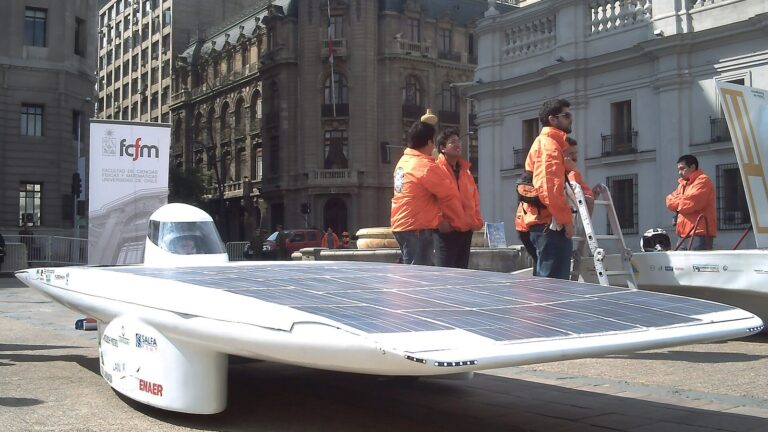 3 WheelsEolian 2 – Chile’s Solar Car from the Atacama to Australia
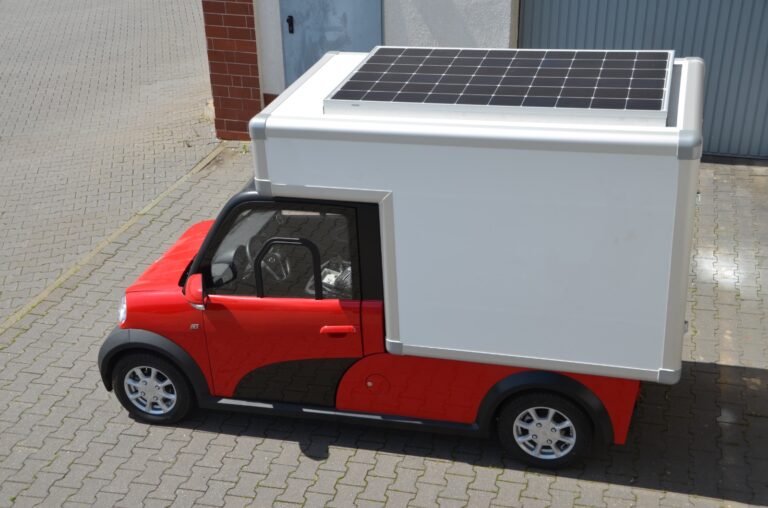 4 WheelsARI 458 Solar – An Electric Micro-Van That Charges Itself
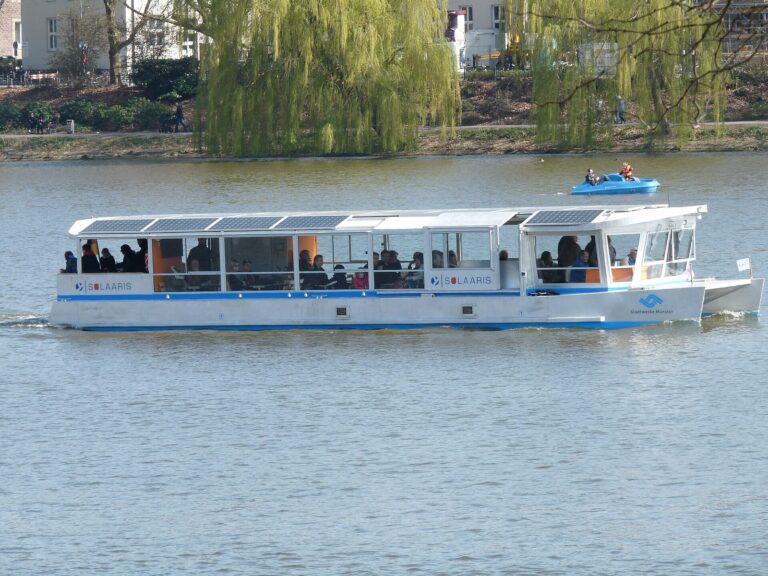 BoatsSolaaris – Münster’s Solar Water Bus on the Aasee
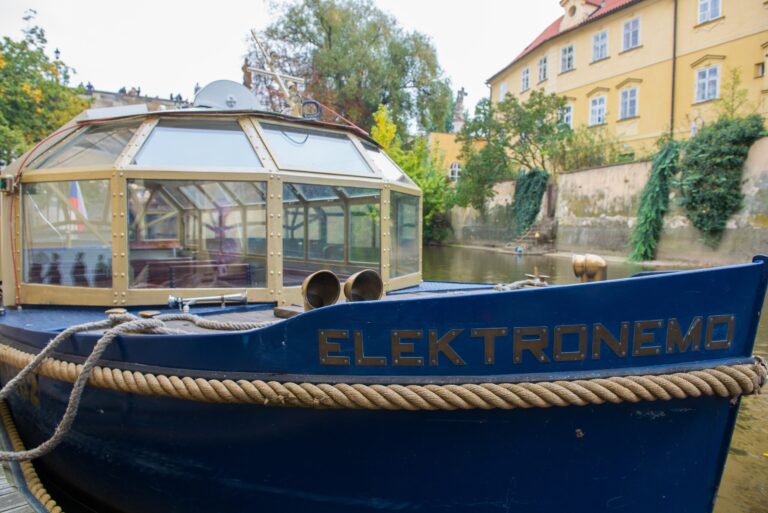 BoatsElektronemo – Prague’s Solar Boat in the Devil’s Channel
 5+ Wheels · TrailerSolatrike II
 5+ WheelsSpirit – The Solar Rover That Lasted 20 Times Longer Than Planned
 BoatsSerpentine Solar Shuttle – London’s Solar Boat in Hyde Park
 BoatsTU Delft Solar Boat – Flying Over Water on Hydrofoils
 4 WheelsStella Lux – The Energy-Positive Family Car
 4 WheelsLightyear 0 – The First Production Solar Car
 PlanesNASA Helios – The Solar Wing That Flew to 29 km
 BoatsNeckarsonne – Heidelberg’s Big Solar Catamaran
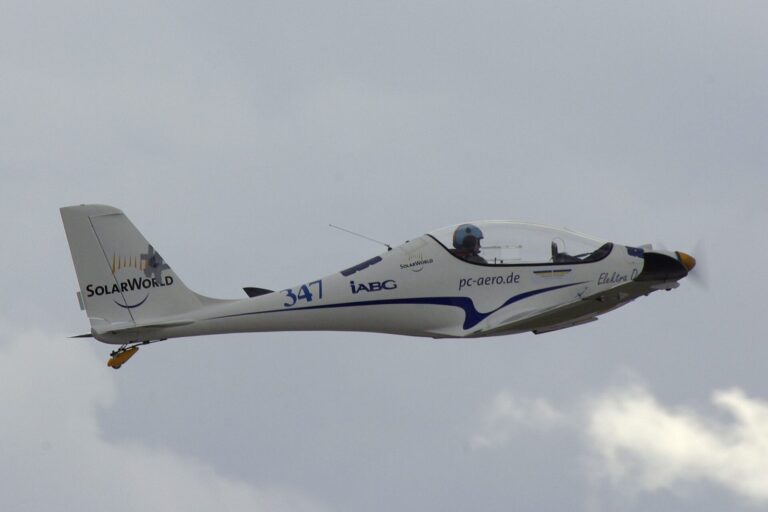 PlanesElektra One Solar – A Light Aircraft with Solar Wings
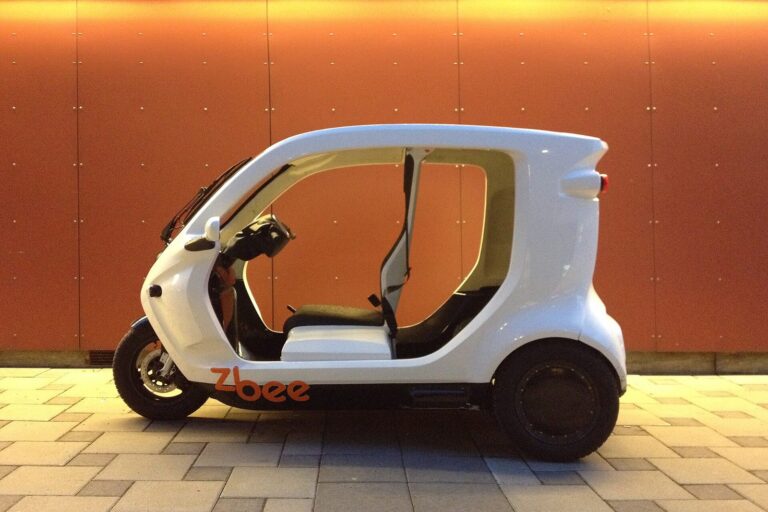 3 WheelsClean Motion Zbee – A 230 kg Electric Trike from Sweden
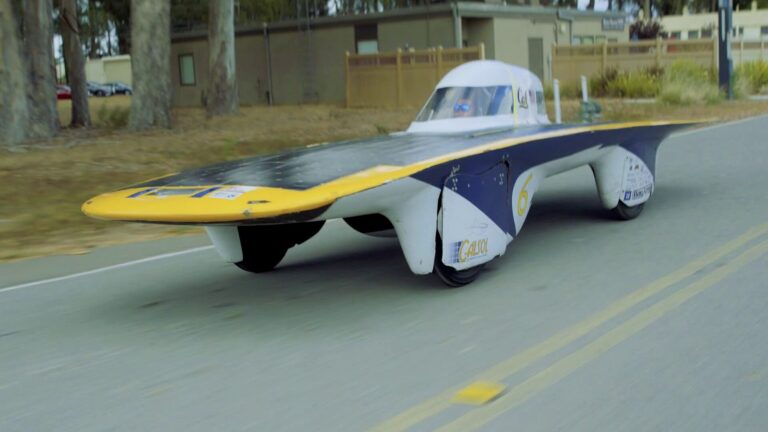 3 WheelsCalSol Zephyr – Berkeley’s First Win After 27 Years
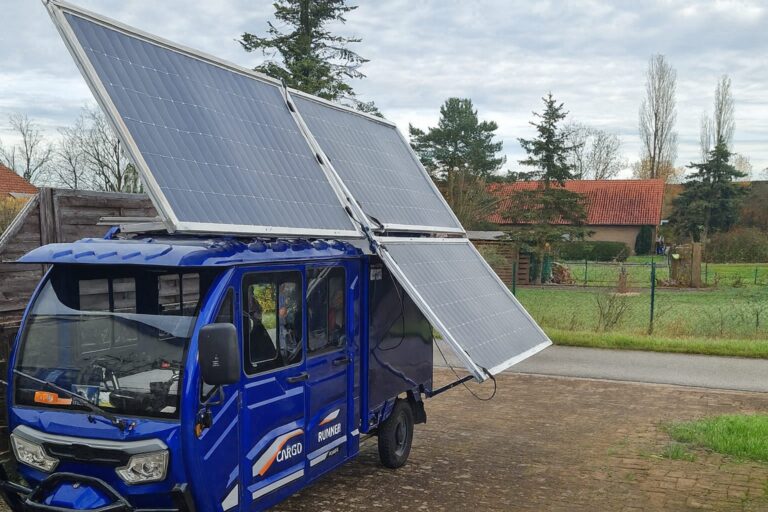 3 WheelsSolarcamper
 5+ WheelsLunokhod 1 – The First Solar-Charged Rover on the Moon
 5+ WheelsMars rover Opportunity
 2 WheelsDIY Off-Grid Solar E-Bike by Andreas Lemmer
 4 WheelsThe Big Lemon – The UK’s First Solar-Powered Bus
 4 WheelsSono Sion – The Solar Car for Everyone
 BoatsMalt’s Mermaid – Across the Pacific on Sunlight