
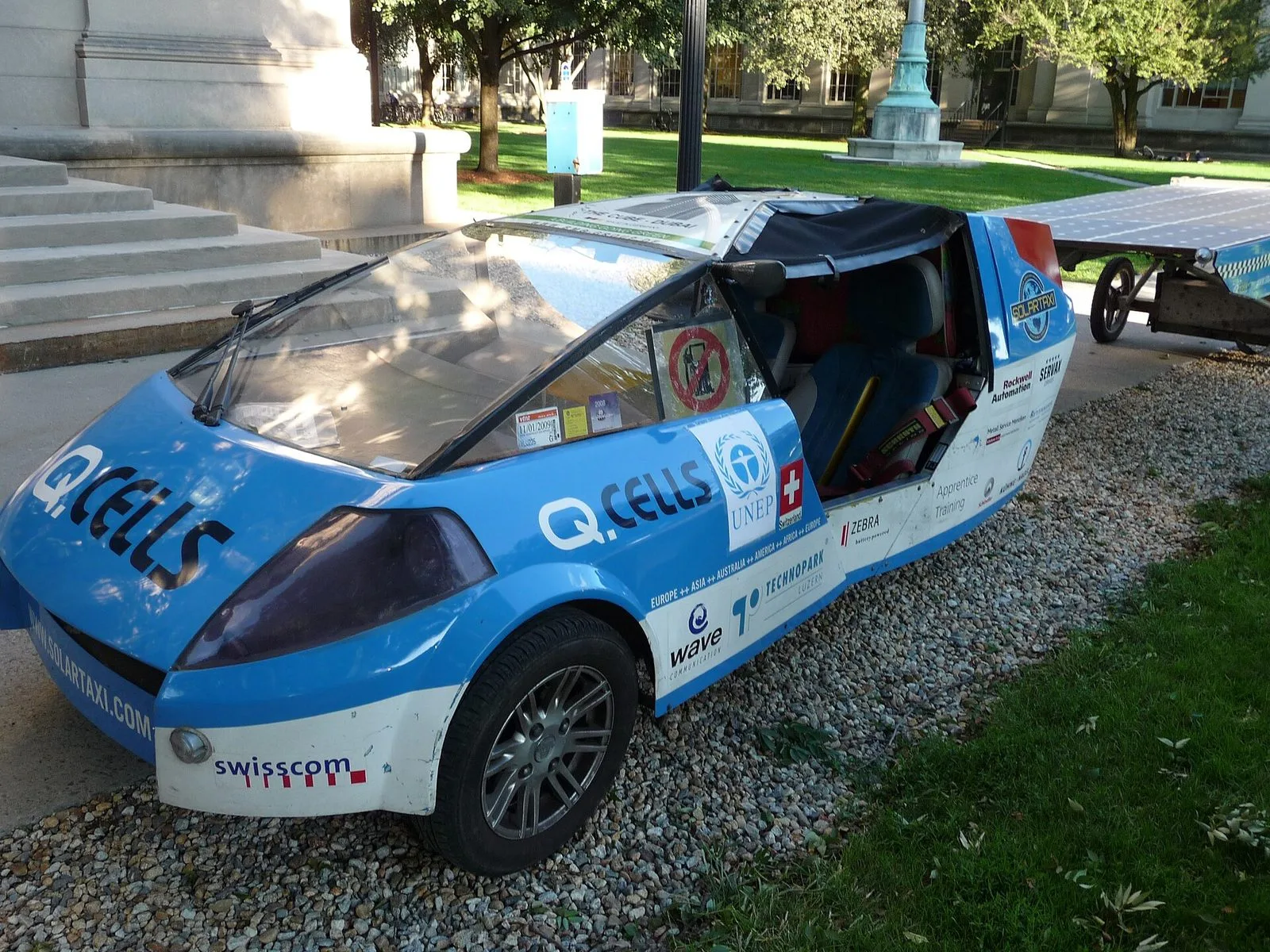
Some people dream of driving around the world. Louis Palmer, a Swiss schoolteacher from Lucerne, dreamed of doing it without a drop of fuel. In 2004 he challenged students at several Swiss universities to build a vehicle that could do exactly that. The result was the Solartaxi, and between 4 July 2007 and 18 December 2008 it became the first solar vehicle to circle the globe.
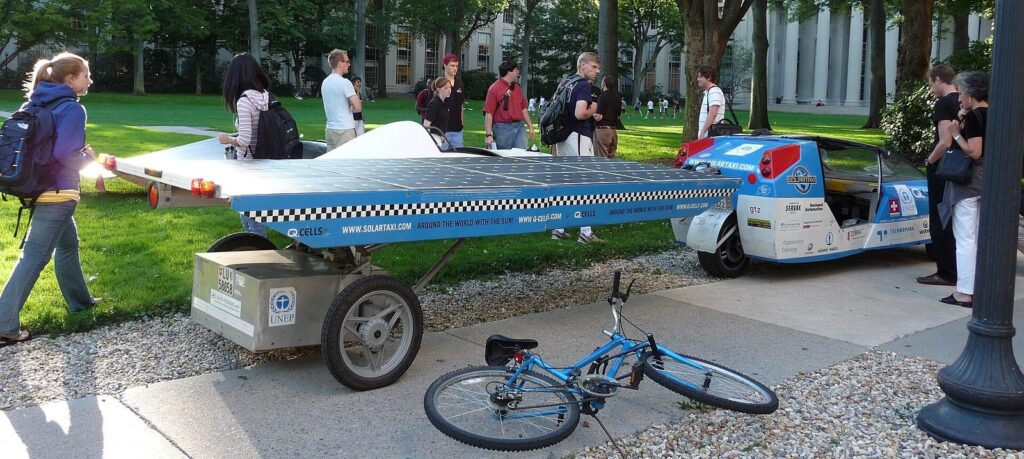
The car itself is a two-seat electric three-wheeler weighing about 500 kg, with a top speed of 90 km/h and a consumption of only 8 kWh per 100 km. A clever detail: the steering wheel can be moved, so either seat can be the driver’s seat. The energy came from a separate 250 kg trailer covered with about 6 m² of silicon solar cells, the same idea many of our members use today with a solar bike trailer.
The route ran east from Lucerne through Eastern Europe, the Balkans, the Middle East and India to Bali, where Palmer joined the UN climate conference 2007. Greenpeace’s Rainbow Warrior carried the car to New Zealand. From there the Solartaxi drove through Australia, East Asia, China, South Korea, Canada and the USA. Over 18 months it covered 54,000 km in 38 countries, with many people taking a ride along the way.
Palmer was honest about the limits: on long days the car needed more energy than the trailer could deliver, so it was also charged from the grid. To balance this, the team fed the same amount of solar power into the grid from a solar installation in Switzerland. Engineer Thomas Gottschalk, who led the construction, was the only team member to ride along for the whole trip, and filmmaker Erik Schmitt documented the journey from India onwards.
For the trip Palmer received the European Solar Prize (2009) and the UN Champions of the Earth award (2011). He went on to organise the Zero Emissions Race and the WAVE electric vehicle rallies. Fifteen years before The Sun Trip sent solar bikes across Eurasia, the Solartaxi proved that a sun-powered vehicle can cross continents.
Technical data
| Builder | Louis Palmer & team, with four Swiss universities (HTA Lucerne and others) |
|---|---|
| Vehicle | Two-seat electric three-wheeler + solar trailer |
| Weight | ~500 kg (car) + ~250 kg (trailer) |
| Solar | ~6 m² silicon cells on the trailer |
| Consumption | ~8 kWh / 100 km |
| Top speed | 90 km/h |
| Journey | 4 Jul 2007 – 18 Dec 2008, Lucerne → Lucerne, 54,000 km, 38 countries |
Photos
- Top photo: SayCheeeeeese / Wikimedia Commons, Public domain
- The Solartaxi with its solar trailer: the panels rode behind… Photo: SayCheeeeeese / Wikimedia Commons, Public domain
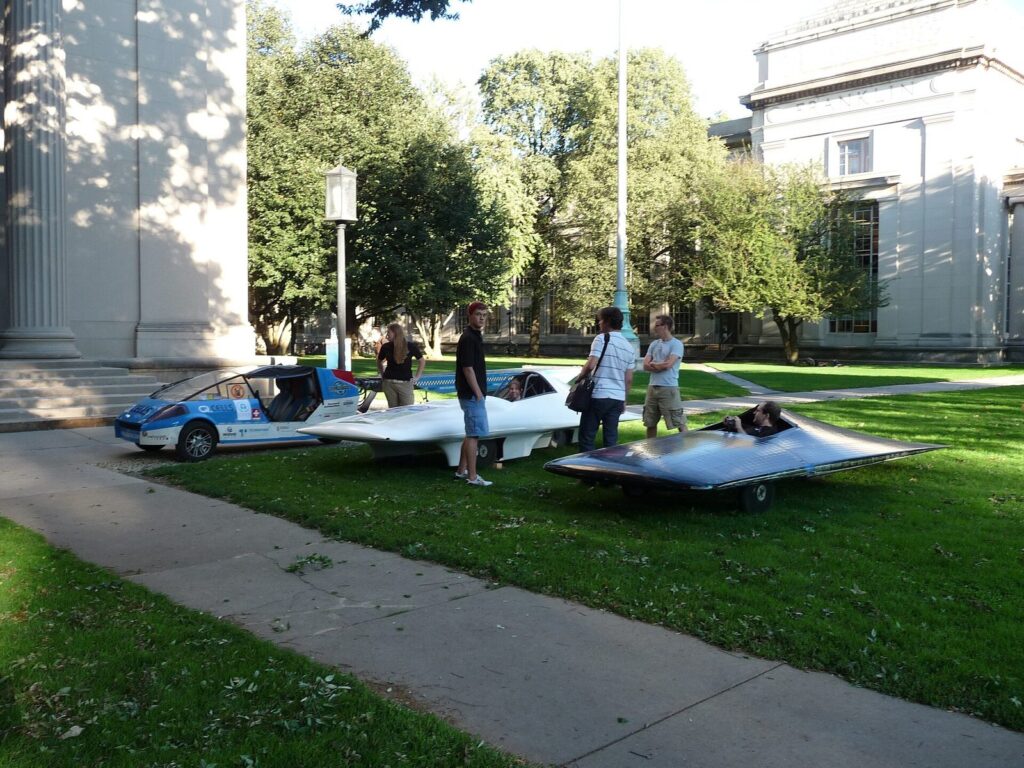
- The Solartaxi visiting the MIT solar car team, next to its r… Photo: SayCheeeeeese / Wikimedia Commons, Public domain
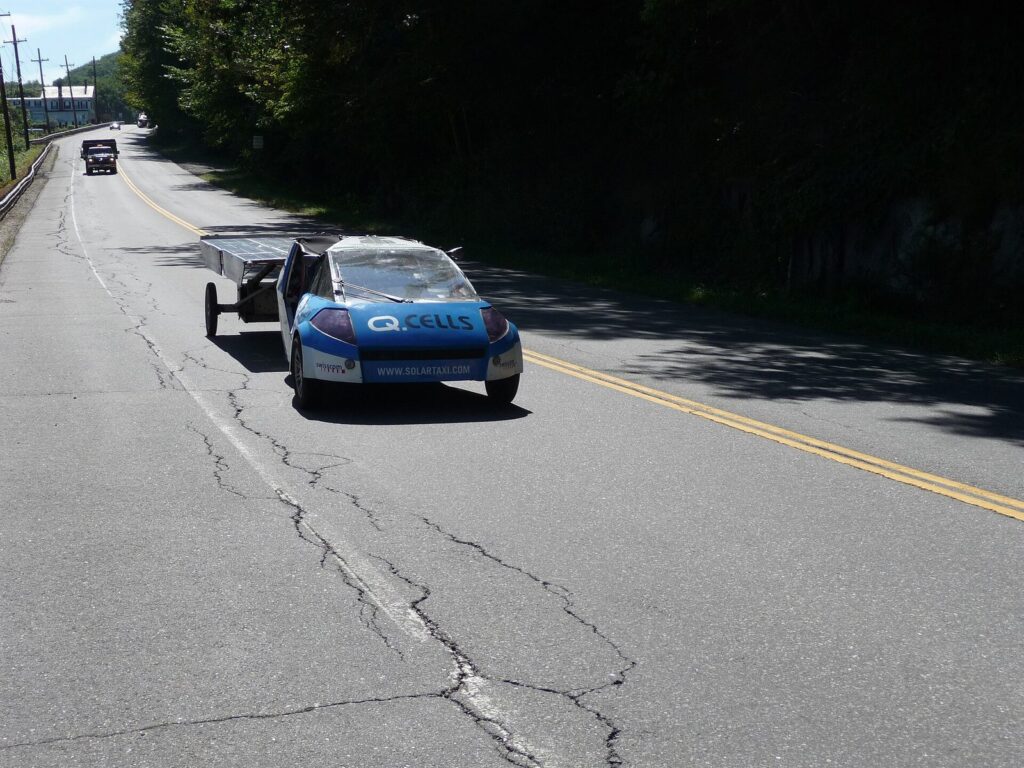
- On the road in Vermont during the North American leg of the… Photo: SayCheeeeeese / Wikimedia Commons, Public domain
Sources
Keep exploringMore solar projects
 BoatsSolar Odyssey – A Solar-Electric Racing Trimaran
 4 WheelsThe Big Lemon – The UK’s First Solar-Powered Bus
 3 WheelsMidnight Sun – Waterloo’s Solar Cars and a 15,070 km Record
 PlanesNASA Centurion – The 63-Metre Step Between Pathfinder and Helios
 4 WheelsNuna 7 – Delft’s First Four-Wheeled World Champion
 4 WheelsStella Vita – A Solar-Powered House on Wheels
 4 WheelsARI 458 Solar – An Electric Micro-Van That Charges Itself
 BoatsAlstersonne – Hamburg’s Solar Boat on the Alster
 BoatsFährBär – Berlin’s Solar Ferries
 4 WheelsStella Lux – The Energy-Positive Family Car
 4 WheelsStella Vie – The Solar Family Car from Eindhoven
 BoatsSolarWave – A Solar Yacht with Four Cabins
 3 WheelsMomentum – Michigan’s Three-Wheeled Solar Champion
 BoatsTU Delft Solar Boat – Flying Over Water on Hydrofoils
 3 WheelsNuna 3 – Delft’s Record Run at 102.75 km/h
 5+ WheelsByron Bay Solar Train – The First Solar-Powered Passenger Train
 3 WheelsAurora 101 – Australia’s Home-Grown Solar Champion
 BoatsMobiCat – Switzerland’s Big Solar Lake Catamaran
 BoatsMalt’s Mermaid – Across the Pacific on Sunlight
 TrailerSolarTrails
 Trailerthe Tin Tent
 BoatsEnergy Observer – Sun, Wind and Hydrogen at Sea
 BoatsSolaaris – Münster’s Solar Water Bus on the Aasee
 4 WheelsMercedes-Benz / Alpha Real – Winner of the First Solar Car Race
 4 WheelsVenturi Eclectic – The Sun-and-Wind City Car from Monaco
 5+ WheelsLunokhod 1 – The First Solar-Charged Rover on the Moon
 4 WheelsSunswift 7 – 1,000 km on One Charge in Under 12 Hours
 PlanesSunseeker II – First Solar Plane Across the Alps
 2 WheelsSola.Bike 2 person bike with solar roof
 BoatsAditya – India’s First Solar Ferry
 4 WheelsHuawei Sonnenwagen – Aachen’s Rookie Run Across Australia
 3 WheelsTokai Challenger – 100 km/h Across Australia on Sunlight
 BoatsWayward Sun – A Father and Son’s Solar Voyage to Alaska
 4 WheelsHySolarKit – Turning an Ordinary Car into a Solar Hybrid
 PlanesNASA Helios – The Solar Wing That Flew to 29 km
 PlanesSolar Riser – The First Human Flight on Solar Power (1979)
 3 WheelsSolar Eagle II – Cal State LA’s Pole-Position Racer
 2 WheelsDIY Off-Grid Solar E-Bike by Andreas Lemmer
 5+ WheelsSpirit – The Solar Rover That Lasted 20 Times Longer Than Planned
 4 WheelsSolarWorld GT – Around the World in a Solar Car
 4 WheelsMaize & Blue – Michigan’s 1993 National Champion
 PlanesSolair I – Germany’s Solar Aircraft Pioneer
 BoatsSunCat 120 – Berlin’s Solar Catamaran on the Spree
 3 WheelsEolian 2 – Chile’s Solar Car from the Atacama to Australia
 3 WheelsCalSol Zephyr – Berkeley’s First Win After 27 Years
 PlanesPathfinder-Plus – Solar Wing Record at 80,201 Feet
 BoatsElektronemo – Prague’s Solar Boat in the Devil’s Channel
 4 WheelsSolar Buzz – A DIY Solar Bus for a Small Town
 Planesicaré 2 – The Solar Glider from Stuttgart
 4 WheelsSquad Solar City Car – A Solar Microcar for Everyday Errands
 4 WheelsGM Sunraycer – Winner of the First World Solar Challenge
 3 WheelsClean Motion Zbee – A 230 kg Electric Trike from Sweden
 5+ WheelsLunokhod 2 – 39 km on the Moon, a Record for 41 Years
 4 WheelsLightyear 0 – The First Production Solar Car
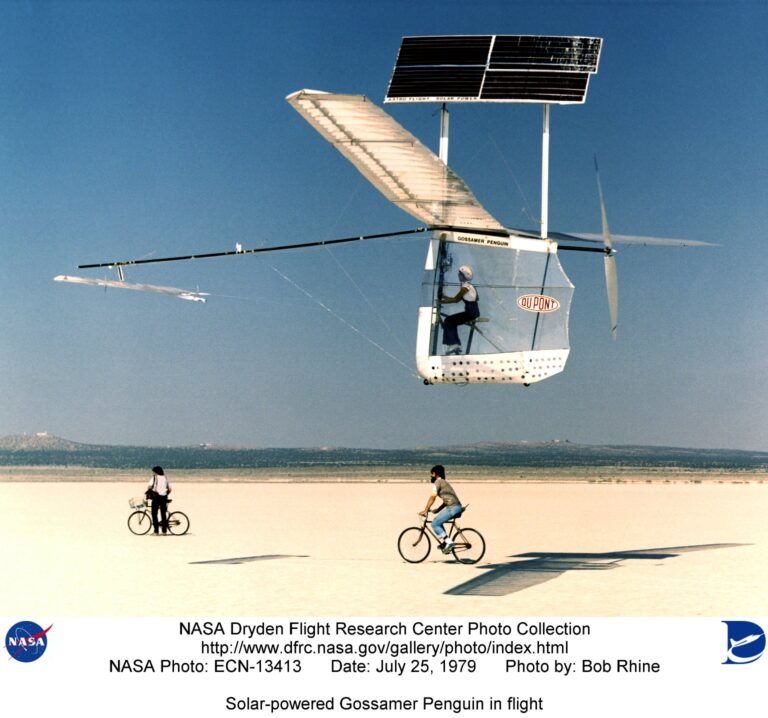 PlanesGossamer Penguin – Pioneer of Piloted Solar Flight
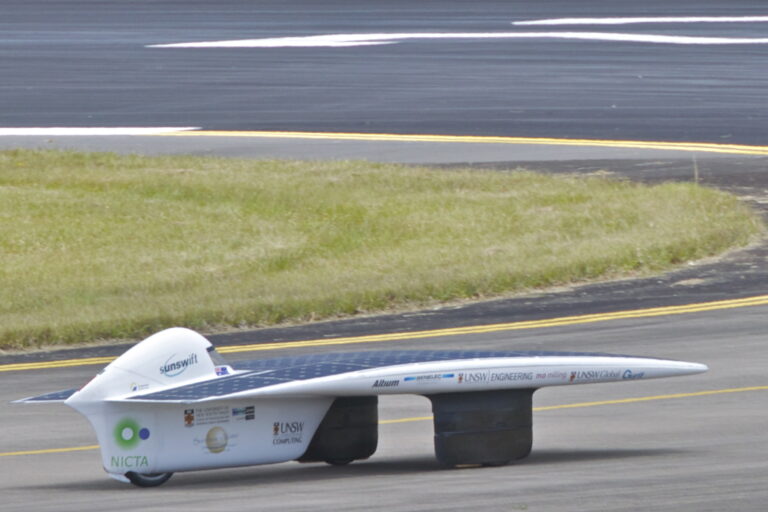 3 WheelsSunswift IVy – The Fastest Car on Pure Solar Power
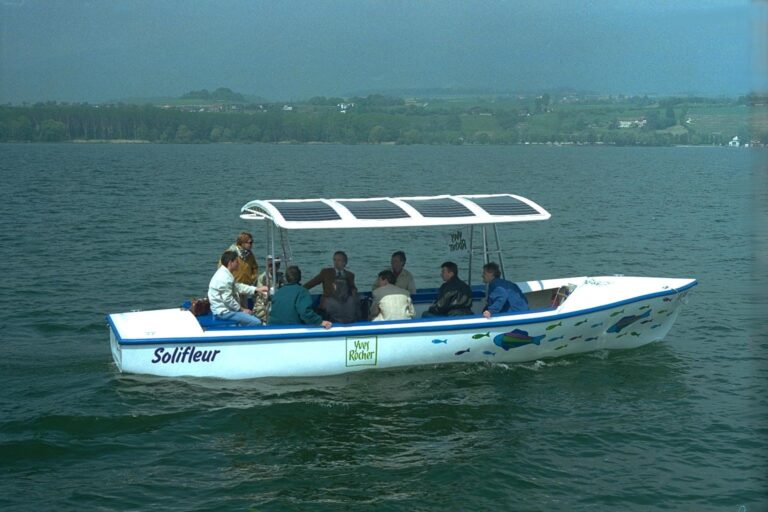 BoatsSolifleur – One of the First Solar Passenger Boats
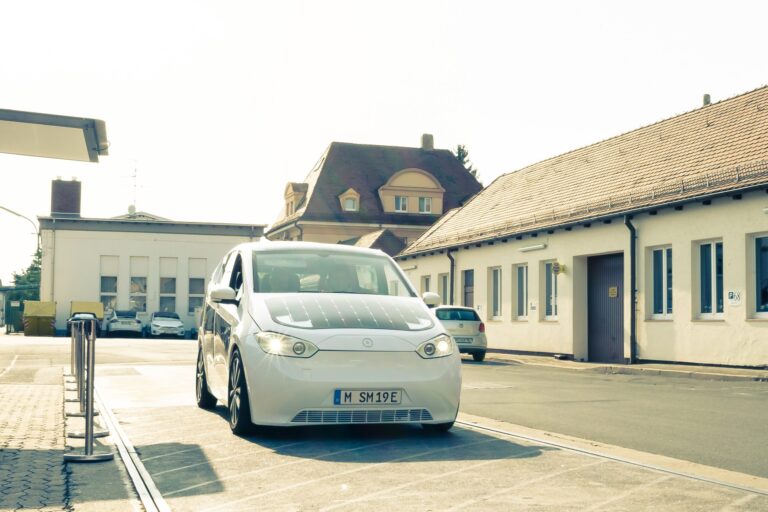 4 WheelsSono Sion – The Solar Car for Everyone
 BoatsMS Staffelseerin – 137 km on One Battery Charge
 BoatsGalilée & Copernic – La Rochelle’s Solar Sea Buses
 3 WheelsOrganic Transit ELF – The Solar Velomobile
 5+ WheelsSojourner – The First Solar Rover on Mars
 4 WheelsGreen Lightning & Green Thunder – Top Dutch Solar Racing
 PlanesSolarStratos – Climbing Toward the Stratosphere on Sunlight
 4 WheelsVéLorean – A Side-by-Side Solar Tandem Quad
 3 WheelsStanford Luminos – 10,000 Safe Miles and 4th in the World
 5+ WheelsKirályrét Solar Railcar – A Forest Train Running on Sunshine
 BoatsBluebottle – An Ocean Drone Powered by Sun, Wind and Waves
 BoatsNeckarsonne – Heidelberg’s Big Solar Catamaran
 3 WheelsSolarcamper