
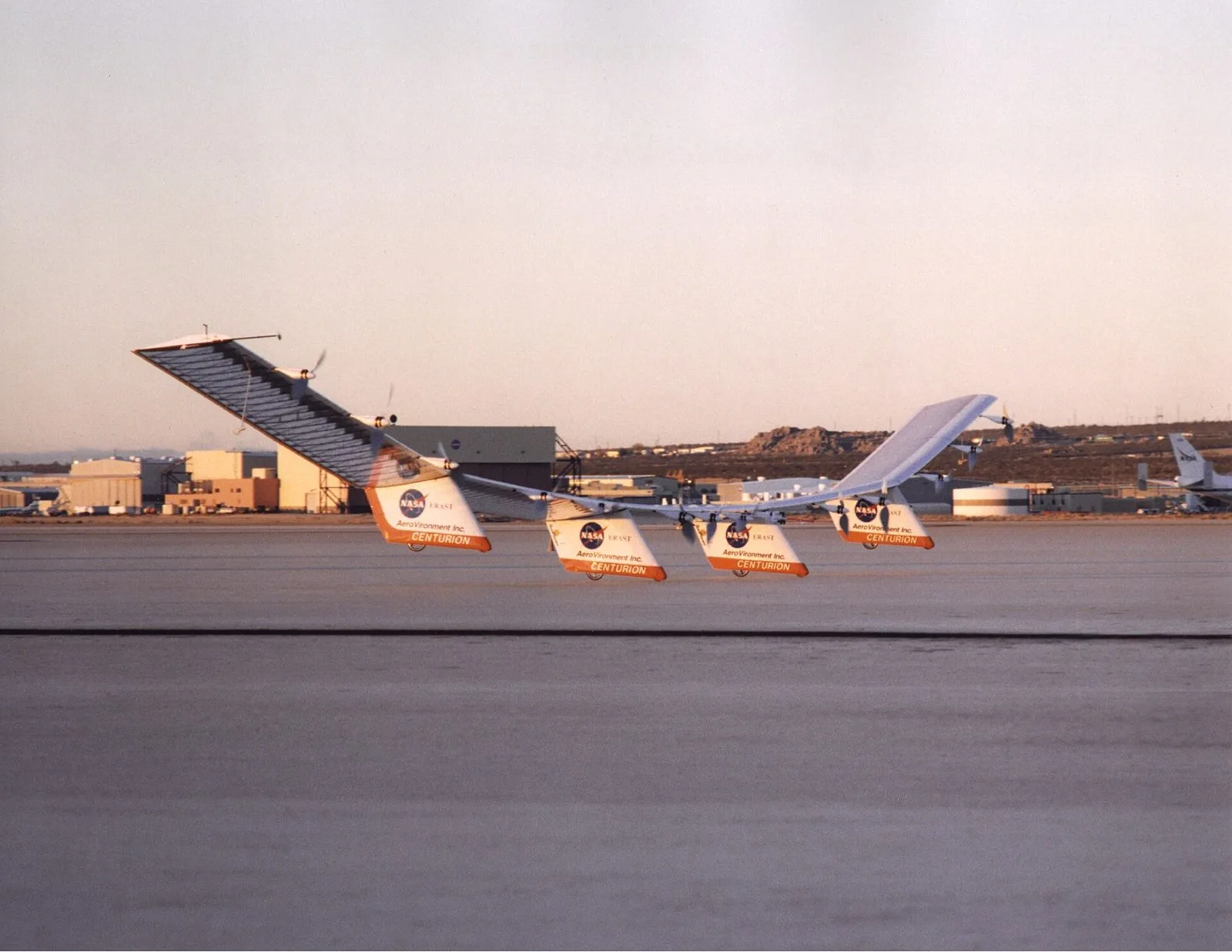
On our site you can already read about two NASA solar wings: Pathfinder-Plus, which flew to 80,201 feet, and Helios, which reached almost 29 km. Between them sits Centurion, the third aircraft in the series. It was built by AeroVironment under NASA’s ERAST programme (Environmental Research Aircraft and Sensor Technology).
The goal was ambitious: a solar plane that could reach 100,000 feet (30,000 m), serve as an “atmospheric satellite” for research and communications, and stay aloft for a long time. NASA’s programme managers decided the lowest-risk path was to scale up the proven flying-wing concept of Pathfinder.
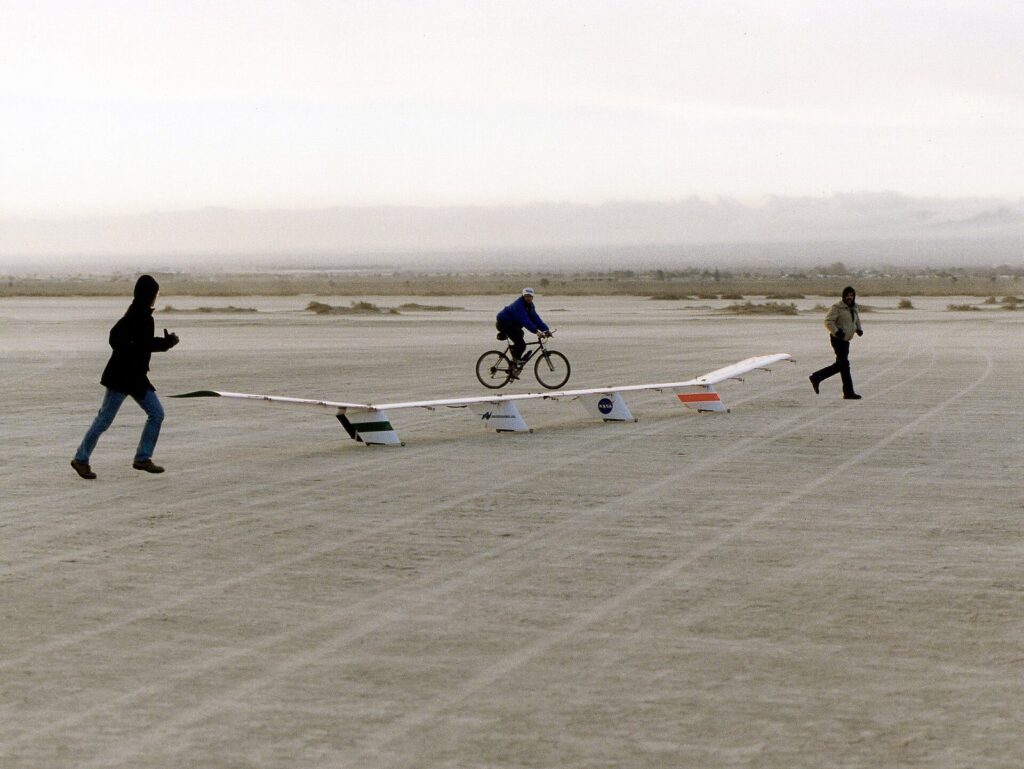
A quarter-scale model first flew at El Mirage Dry Lake on 4 March 1997; as the photo shows, crew members ran and cycled alongside it. The full-size Centurion had a wingspan of 63 m (206 ft), 14 electric motors and four underwing pods for batteries, flight controls, ballast and landing gear. Its structure was stronger than Pathfinder’s, able to carry up to 272 kg (600 lb) of payload, and its wing had a new high-altitude airfoil.
The maiden flight took place at Rogers Dry Lake on 10 November 1998 and lasted 1 hour 24 minutes, with a 68 kg steel anvil hanging under the wing to simulate a payload. Two more flights followed; on the last one the aircraft flew at its maximum weight of 819 kg. All three test flights ran on battery power to check handling and structure. They went so well that NASA decided to extend the wing even further, and in January 1999 work began on the Helios Prototype.
Technical data
| Builder | AeroVironment for NASA ERAST (USA) |
|---|---|
| Type | Unmanned solar/electric flying wing |
| Wingspan | 63 m (206 ft) |
| Motors | 14 electric motors, 4 underwing pods |
| Payload | Up to 272 kg (600 lb) |
| Weight | 628 kg at first flight (incl. 68 kg ballast), 819 kg max. |
| First flights | Quarter-scale model 4 Mar 1997; full size 10 Nov 1998, Rogers Dry Lake |
| Successor | Helios Prototype (from 1999) |
Photos
- Top photo: NASA photo by Tom Tschida / Wikimedia Commons, Public domain
- Crew members jog and cycle beside the quarter-scale model of… Photo: NASA photo by Brent Wood / Wikimedia Commons, Public domain
Sources
Keep exploringMore solar projects
 Trailerthe Tin Tent
 2 WheelsSola.Bike 2 person bike with solar roof
 BoatsTU Delft Solar Boat – Flying Over Water on Hydrofoils
 3 WheelsCalSol Zephyr – Berkeley’s First Win After 27 Years
 5+ WheelsSojourner – The First Solar Rover on Mars
 4 WheelsHySolarKit – Turning an Ordinary Car into a Solar Hybrid
 4 WheelsHuawei Sonnenwagen – Aachen’s Rookie Run Across Australia
 PlanesElektra One Solar – A Light Aircraft with Solar Wings
 5+ WheelsLunokhod 1 – The First Solar-Charged Rover on the Moon
 2 Wheels · 3 WheelsThe Sun Trip – Crossing Continents on Solar Bikes
 3 WheelsXOF1 – Marcelo da Luz’s Solar Car to the Arctic Ocean
 BoatsSolar Sailor – The Ferry with Solar Wings
 3 WheelsMomentum – Michigan’s Three-Wheeled Solar Champion
 BoatsWayward Sun – A Father and Son’s Solar Voyage to Alaska
 5+ Wheels · TrailerSolatrike II
 Planesicaré 2 – The Solar Glider from Stuttgart
 4 WheelsSono Sion – The Solar Car for Everyone
 BoatsAltaussee – Austria’s First Solar Passenger Ship
 BoatsMS Staffelseerin – 137 km on One Battery Charge
 5+ WheelsMars rover Opportunity
 4 WheelsARI 458 Solar – An Electric Micro-Van That Charges Itself
 BoatsSolaaris – Münster’s Solar Water Bus on the Aasee
 PlanesSolarStratos – Climbing Toward the Stratosphere on Sunlight
 3 WheelsTokai Challenger – 100 km/h Across Australia on Sunlight
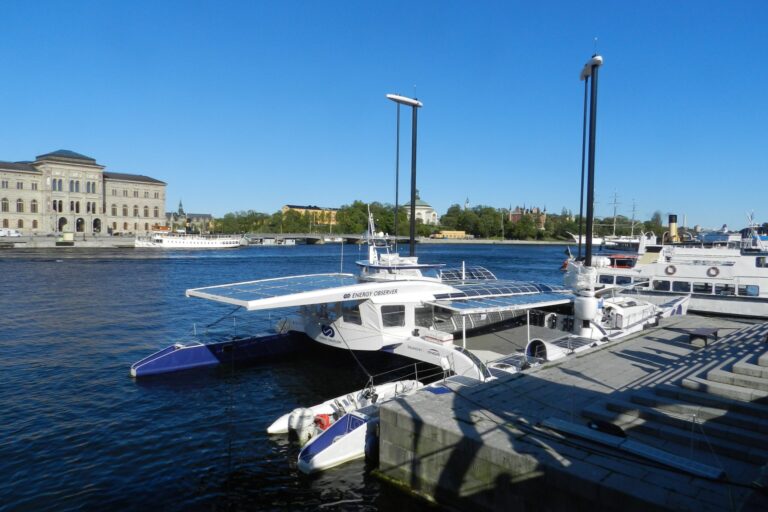 BoatsEnergy Observer – Sun, Wind and Hydrogen at Sea
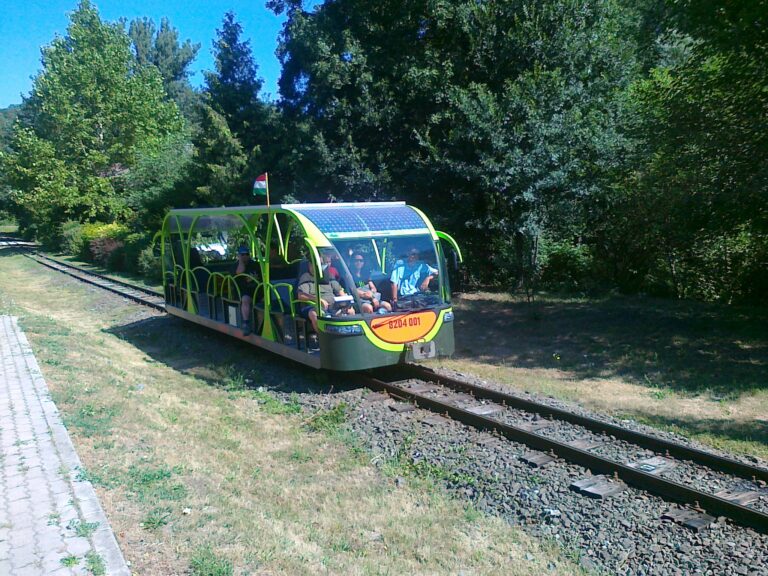 5+ WheelsKirályrét Solar Railcar – A Forest Train Running on Sunshine
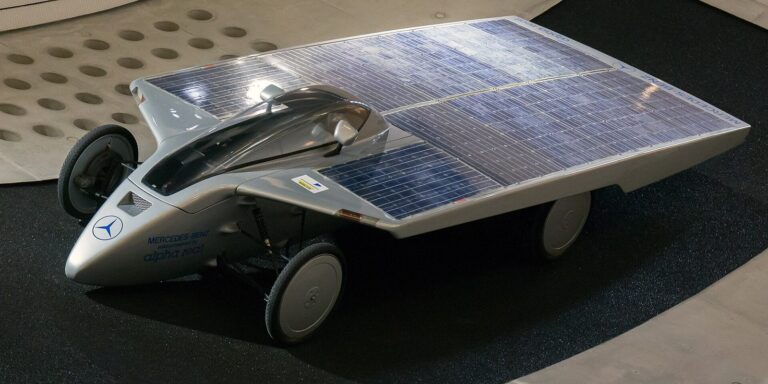 4 WheelsMercedes-Benz / Alpha Real – Winner of the First Solar Car Race
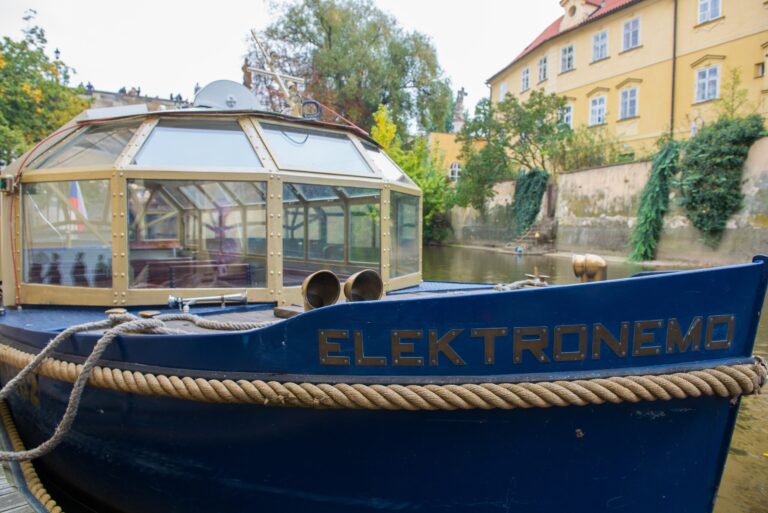 BoatsElektronemo – Prague’s Solar Boat in the Devil’s Channel
 BoatsMalt’s Mermaid – Across the Pacific on Sunlight
 5+ WheelsByron Bay Solar Train – The First Solar-Powered Passenger Train
 4 WheelsGM Sunraycer – Winner of the First World Solar Challenge
 BoatsOrca ten Broke – Berlin’s Solar Seminar Ship
 4 WheelsMaize & Blue – Michigan’s 1993 National Champion
 BoatsSolarWave – A Solar Yacht with Four Cabins
 2 WheelsNTS SunCycle – The Solar Cargo Bike
 3 WheelsMidnight Sun – Waterloo’s Solar Cars and a 15,070 km Record
 PlanesSunseeker II – First Solar Plane Across the Alps
 4 WheelsStella Vita – A Solar-Powered House on Wheels
 3 WheelsAptera – The Car That Drinks Sunlight
 PlanesNASA Helios – The Solar Wing That Flew to 29 km
 PlanesSolar Impulse 1 – The Prototype That Flew Through the Night
 3 WheelsNuna 3 – Delft’s Record Run at 102.75 km/h
 PlanesSolar Impulse 2 – Flying Around the World on Sunlight
 PlanesSolair I – Germany’s Solar Aircraft Pioneer
 BoatsBluebottle – An Ocean Drone Powered by Sun, Wind and Waves
 4 WheelsNuna 7 – Delft’s First Four-Wheeled World Champion
 4 WheelsVéLorean – A Side-by-Side Solar Tandem Quad
 3 WheelsUmicar Infinity – Belgium’s Runner-Up in the Outback
 3 WheelsSolarcamper
 PlanesIngenuity – The Solar-Charged Helicopter That Flew on Mars
 5+ WheelsLunokhod 2 – 39 km on the Moon, a Record for 41 Years
 BoatsSunCat 120 – Berlin’s Solar Catamaran on the Spree
 BoatsAditya – India’s First Solar Ferry
 5+ WheelsSpirit – The Solar Rover That Lasted 20 Times Longer Than Planned
 4 WheelsStella Lux – The Energy-Positive Family Car
 BoatsSolar Odyssey – A Solar-Electric Racing Trimaran
 BoatsAlstersonne – Hamburg’s Solar Boat on the Alster
 3 WheelsStanford Luminos – 10,000 Safe Miles and 4th in the World
 3 WheelsOrganic Transit ELF – The Solar Velomobile
 TrailerSolarTrails
 3 Wheels · TrailerSolartaxi – The First Trip Around the World by Solar Car
 2 WheelsDIY Off-Grid Solar E-Bike by Andreas Lemmer
 BoatsGalilée & Copernic – La Rochelle’s Solar Sea Buses
 3 WheelsSolar Eagle II – Cal State LA’s Pole-Position Racer
 4 WheelsSquad Solar City Car – A Solar Microcar for Everyday Errands
 3 WheelsSunswift IVy – The Fastest Car on Pure Solar Power
 BoatsTûranor PlanetSolar – Around the World on Sunlight
 PlanesSolar Riser – The First Human Flight on Solar Power (1979)
 BoatsNeckarsonne – Heidelberg’s Big Solar Catamaran
 PlanesGossamer Penguin – Pioneer of Piloted Solar Flight