Flexible solar panels are the natural choice for anything that moves. They weigh a fraction of a glass panel, follow gentle curves and fit racks, trailer lids and trike roofs. But “flexible” does not mean “indestructible”.
Why riders love them
- Light: around 2 kg per 100 W instead of 5–7 kg for a framed glass panel.
- Thin and curved: they follow roofs, fairings and cargo boxes.
- Safer: no sharp frame edges and no glass to shatter in a fall.
The weak points
- Heat: glued flat, they have no air behind them, run hotter and lose power – see temperature coefficients.
- Micro-cracks: repeated bending and vibration slowly crack the brittle cells.
- Lifespan: years rather than the decades of a glass panel – quality and surface material (ETFE vs. PET) make a big difference.
What decides whether they last
Almost everything comes down to how the panel is mounted: the backing it sits on, whether air can reach it, how cables are relieved and whether it flexes on every bump. A well-mounted cheap panel often outlives a badly mounted expensive one. Our guide to mounting panels on a bike, cargo bike or trike gives an overview, and rigid, flexible or foldable? compares the alternatives.
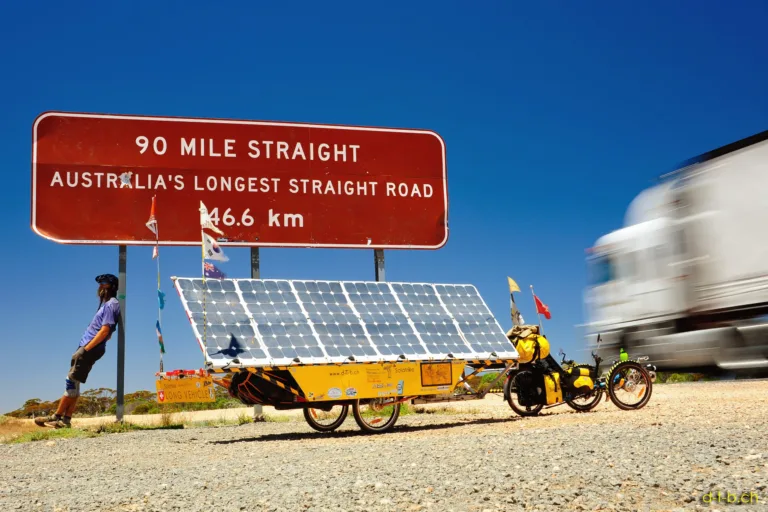
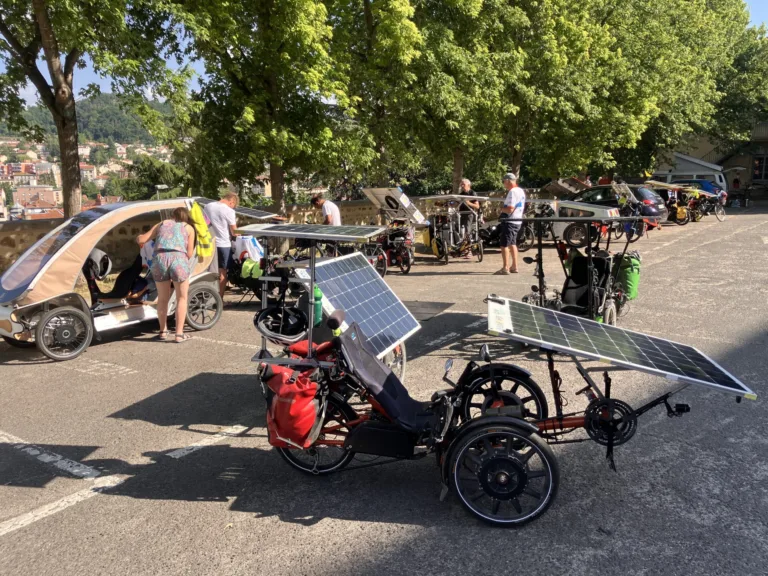
Curved panels never face the sun with all cells at once, so read up on partial shading. For inspiration, look at the Solatrike II, the Sun Trip riders and our solar trikes.