A solar panel on an e-bike raises a fair question: is it still a normal bicycle in the eyes of the law? In the EU, the answer usually depends on the motor – not on where the energy comes from. Here are the basics. Rules differ between countries, so always check your national regulations; this guide is not legal advice.
What makes a pedelec a pedelec
In the EU, an electrically assisted bicycle counts as a normal bicycle – no registration, insurance plate or driving licence – if:
- the motor’s continuous rated power is at most 250 W,
- it assists only while you pedal, and
- the assistance fades out and stops at 25 km/h.
A push-assist up to 6 km/h is allowed. Faster S-pedelecs (up to 45 km/h) are legally mopeds, with type approval, insurance and further rules.
And the solar panel?
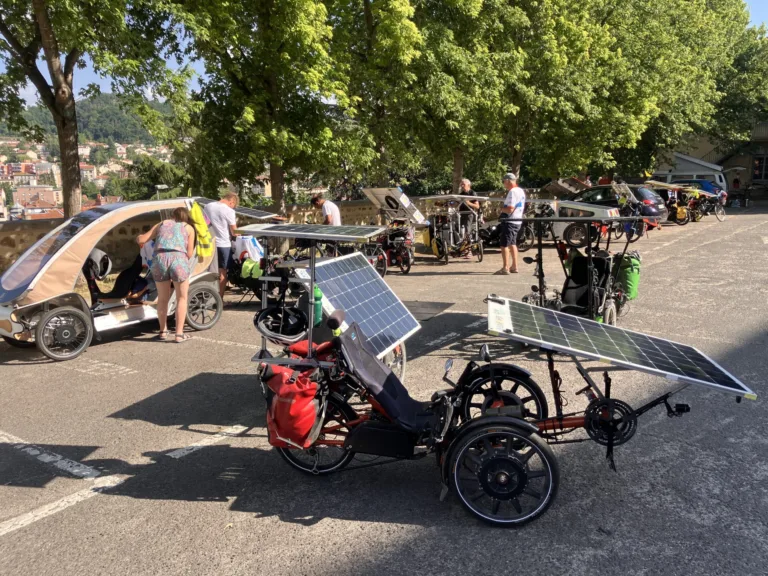
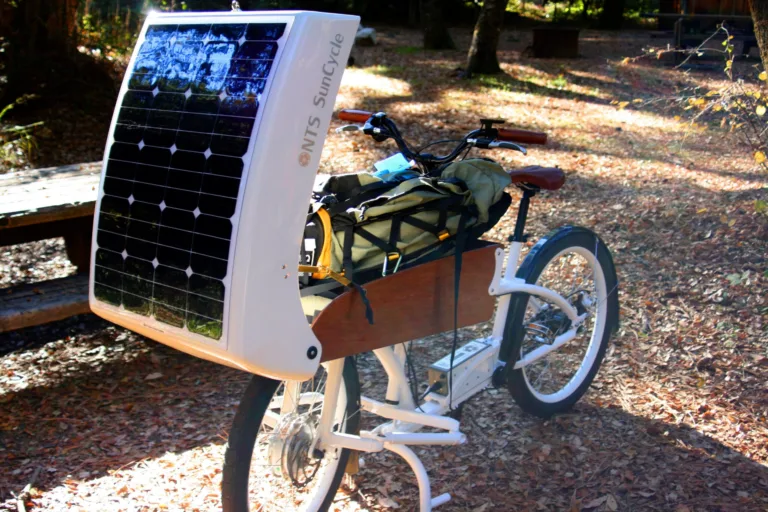
Charging with sunshine does not change the class of your bike: a pedelec with a panel or a solar trailer is still a pedelec, as long as motor and speed limits stay the same. What matters is that the add-ons are safe – firmly mounted, no sharp edges, lights not covered.
Where it gets tricky
- Tuning: raising the speed limit or motor power makes the bike a moped – with legal and insurance consequences.
- Modifications: changes to battery, controller or wiring can affect warranty and insurance; document what you do.
- Trailers and trikes: lighting, width and weight rules apply and vary by country.
Trikes and velomobiles with pedal assistance follow the same 250 W / 25 km/h logic – see our solar trikes. For planning long trips, read how far you can ride on sunshine and the story of the Sun Trip.