Before you think about watts, decide on the type of solar panel. A panel on a moving bike, one on a trailer roof and one you unfold at the campsite face very different conditions. Three families cover almost every project.
Rigid glass panels
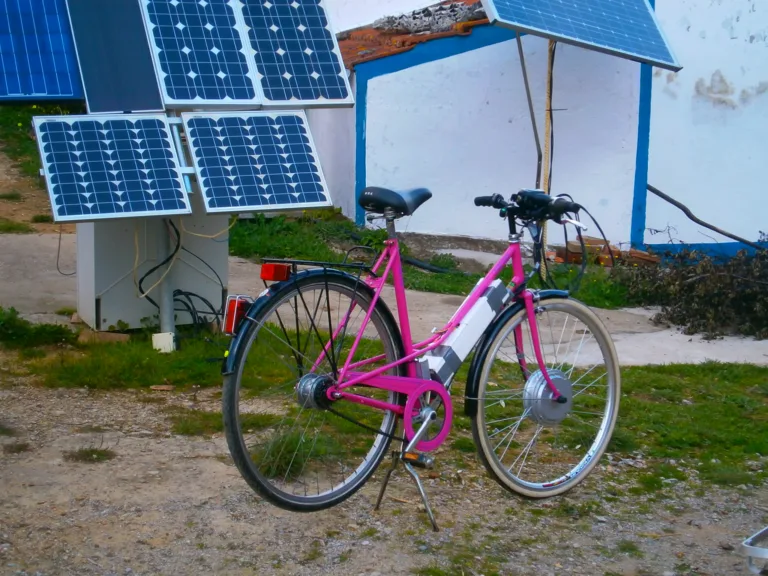
Cheapest per watt, the most durable and cool thanks to the air behind them – but heavy and fragile in a crash. The classic choice for solar trailers, camper roofs and charging at home.
Flexible panels
Thin, light and curvable – ideal for charging while you ride. In return they run hotter and wear out sooner. All about them in our guide to flexible solar panels.
Foldable panels
Carried packed and unfolded at breaks or on the campsite. Because you can tilt them towards the sun, they often harvest more per watt than a flat-mounted panel – but they don’t charge on the move. A perfect partner for a portable power station.
Three questions to decide
- Where is the panel when the sun shines? On the moving bike, on a trailer or roof, or only at stops?
- How much area and weight can you accept? On a bike, area is usually the real limit – see how many watts you need.
- How long should it last? Glass outlives polymer by many years.
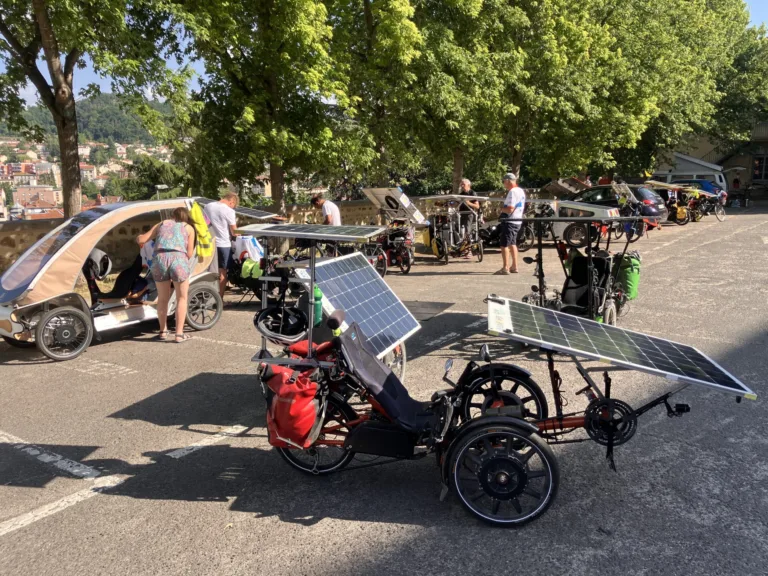
Many builds combine types – a flexible panel for riding plus a foldable one for long breaks. And beware: not every panel delivers what its label promises. Newer technologies such as perovskite cells may change the picture in coming years. For real combinations, look at the solar trikes and the Sun Trip riders.