Almost every e-bike battery is a lithium-ion battery, usually built from round NMC cells. Lithium-ion stores a lot of energy in little weight – exactly what a pedelec needs. Treat it well and it lasts for many years; treat it badly and it loses capacity fast.
How a pack is built
Cells are connected in series to reach the system voltage – 10 cells for a 36 V battery, 13 for a 48 V battery – and in parallel groups for capacity. A battery management system watches every group and switches off when something is wrong. Capacity is best compared in watt-hours, as our guide to Wh, Ah and volts explains.
What wears it out
- Sitting fully charged for long periods, especially when warm.
- Heat above about 40 °C – a pack baking in the sun suffers.
- Running it completely flat and leaving it empty.
- Charging below freezing.
Why solar suits lithium-ion
Solar charging is gentle: small currents and frequent top-ups are exactly what these cells like, and there is no memory effect. The critical part is the charge voltage – too high damages the cells, slightly lower adds lifetime. Set it wrong on your MPPT controller and you either overcharge or waste capacity.
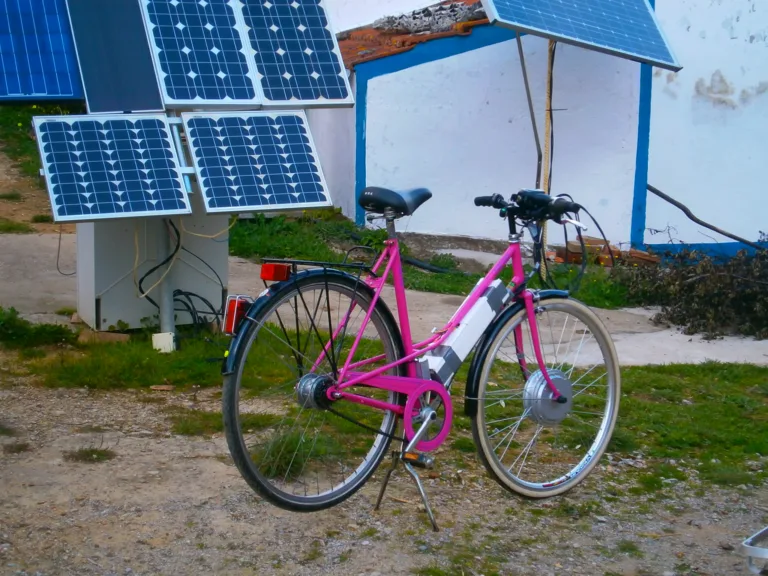
For trailers and campers, LiFePO4 can be the better choice. Before summer, read our battery safety checklist. A fine example is the off-grid solar e-bike by Andreas Lemmer.