Every lithium battery worth using has a battery management system (BMS): a small circuit board that watches the cells and switches the battery off before something goes wrong. Lithium cells are powerful but unforgiving – the BMS is their guard.
What it protects against
- Overcharging of any cell group.
- Deep discharge that would damage the cells.
- Over-current and short circuits.
- Charging in the cold and overheating – if it has temperature sensors.
Balancing
No two cells are identical. Over time some groups end up fuller than others, the BMS stops charging early and usable capacity shrinks. A balancing BMS evens them out at the end of each charge. With LiFePO4 this matters even more.
Why it matters for solar
Some packs have a separate charge input that only accepts a small current. Your MPPT or boost controller has to use the right input and respect its limit. A smart BMS with an app shows every cell – priceless for spotting a weak one early. The EU Battery Regulation even requires e-bike batteries with a BMS to store state-of-health data.
Never bypass it
When a BMS keeps cutting out, it is telling you something – a weak cell, heat, cold or too much current. Charging “around” it is the most dangerous shortcut in solar mobility. Find the cause instead: our safety guide and the battery safety checklist list the warning signs.
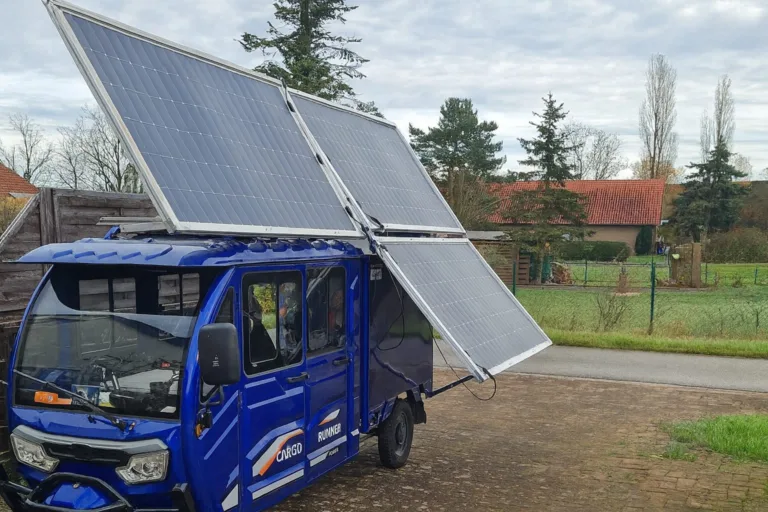
Builders of solar trikes and campers like the Solarcamper rely on a good BMS every day.