You can charge an e-bike battery with solar power in several ways. The challenge is always the same: getting energy from a panel at its own voltage into a 36 V or 48 V battery – safely and with as little loss as possible. Here are the three most common routes.
1. Direct with an MPPT controller
Panel → MPPT charge controller (often a boost model) → the battery’s charge port. The most efficient path, light enough for the bike and it charges while you ride. The price: you must get the charge settings exactly right.
2. Power station plus original charger
Panel → portable power station → your normal e-bike charger. Plug and play and kind to your warranty, but you lose a good share of the energy in the double conversion and carry several extra kilograms. Great for touring with long stops.
3. Solar at home
A plug-in balcony system feeds your home grid, and you charge from the socket as usual. The cheapest watts, no extra weight – but no charging on the road.
Which one suits you?
- Independence from sockets, charging on the move: direct DC.
- Simplicity on tour and power for other devices: power station.
- Mostly riding from home: balcony solar.
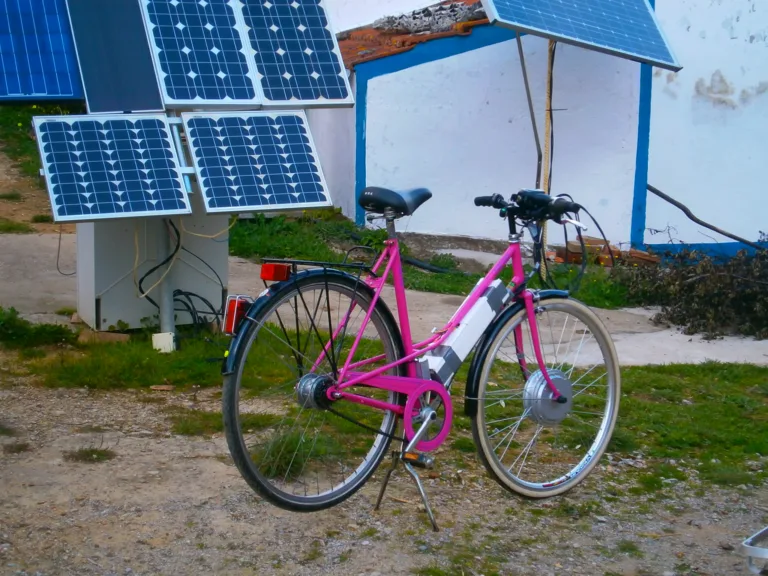
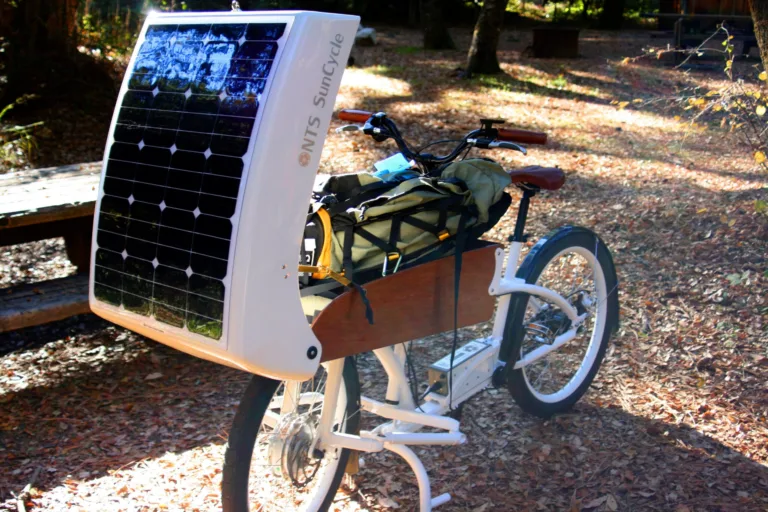
Whatever you choose, the battery’s BMS stays in the circuit and every source gets a fuse – see cables, fuses and connectors. And there is a fourth way that many experienced builders swear by. For inspiration, look at the off-grid e-bike by Andreas Lemmer and our solar e-bikes.