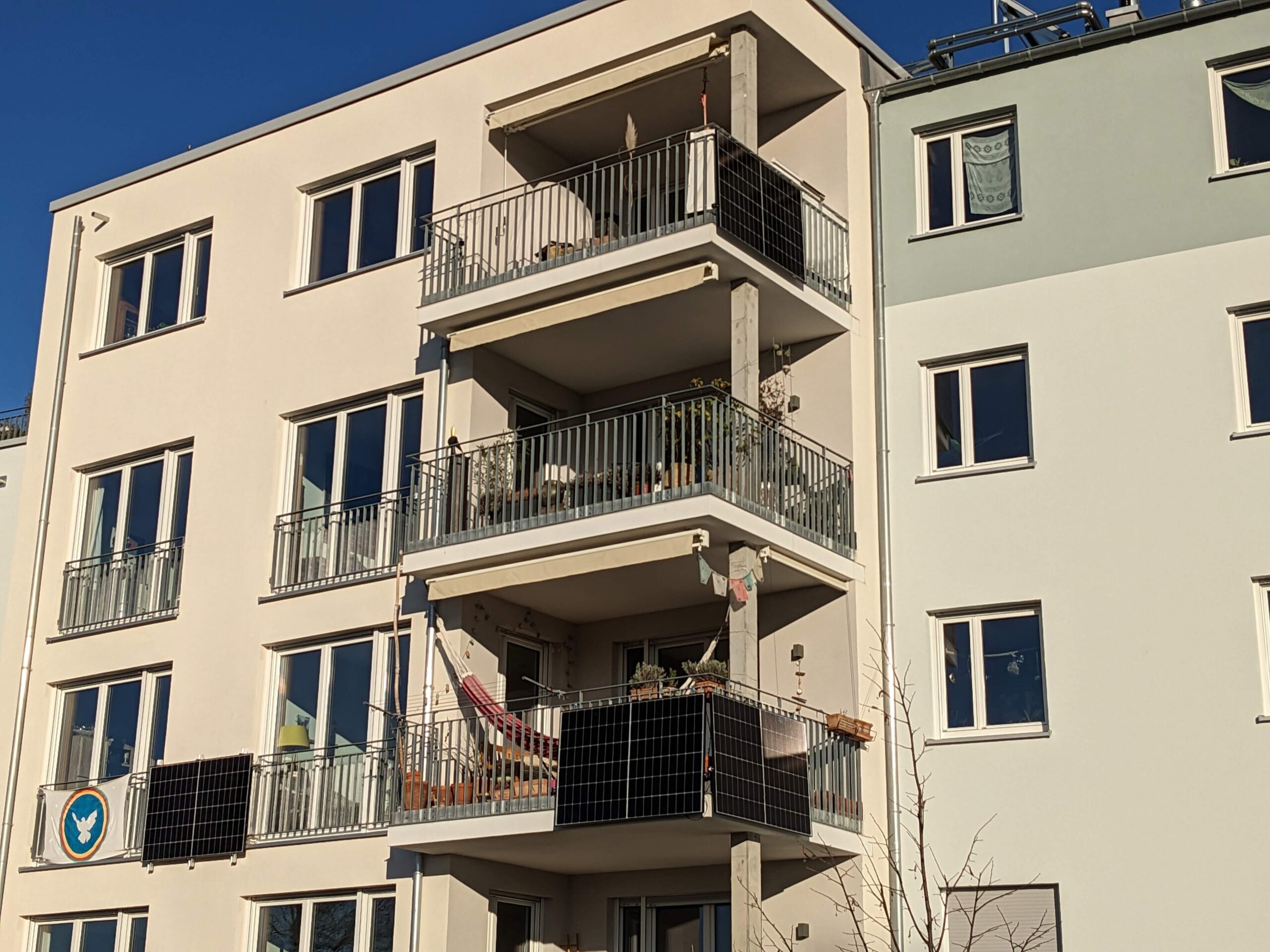
You do not need a roof to ride on sunshine. Plug-in solar, known in Germany as the Balkonkraftwerk (balcony power plant), lets you mount one or two panels on a balcony, terrace or garden fence and plug the inverter straight into a socket. The idea is spreading fast.
Germany: 800 W and simple registration
Germany has led the way. Since May 2024, plug-in systems may feed in up to 800 W (up from 600 W), and registration has been simplified. Well over a million plug-in systems are now registered there, and many more households produce part of their own electricity this way.
United States: state after state
- Utah became the first state to explicitly allow plug-in solar in 2025, for systems under 1,200 W.
- Maine followed, and by 2026 half a dozen more states had passed their own plug-in solar laws.
- On 1 October 2026, California Governor Gavin Newsom signed SB 868, the “Plug and Play Solar Act”, allowing systems up to 1,200 W AC.
- UL Solutions has announced a dedicated safety standard for plug-in solar systems.
Why this matters for e-bikes
A typical e-bike battery holds around 500 Wh. A plug-in system with about 800 W of panels can produce several kilowatt-hours on a good summer day, which is enough for multiple full charges. Plug your charger in while the sun is shining and your rides run mostly on your own solar power, even in a city flat.
A few tips:
- Charge during the day: plug-in systems feed your home circuit, so the e-bike uses the power as it is produced.
- Want to charge at night? Many systems can now be combined with a small LiFePO4 storage unit.
- Use certified inverters and follow the local rules for registration and mounting, especially on rented balconies.
Running your e-bike on balcony power? Share your setup with the community.
Sources: pv magazine USA · MIT Technology Review · Wikipedia: Balcony solar power
Photo (Plug-in solar panels on apartment balconies in Germany): Rudy23 / Wikimedia Commons, CC BY-SA 4.0