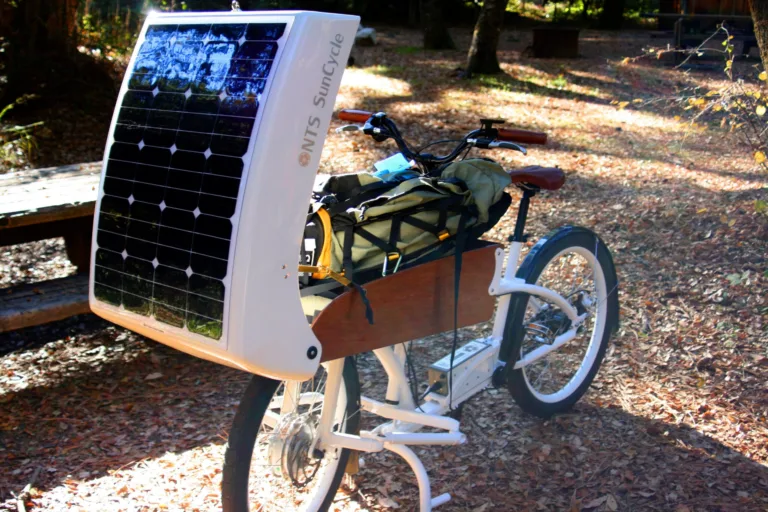
A portable power station is a battery in a box with a built-in solar charge controller, USB ports and a 230 V outlet. For e-bike touring, camping and vans it is the simplest way to start with solar: unfold a panel, plug it in and charge your bike with its original charger.
How it works with an e-bike
Panel → power station (with built-in MPPT) → 230 V outlet → your normal e-bike charger → battery. No settings, no special wiring – the bike is charged exactly as the manufacturer intended. That makes it one of the three classic routes described in 3 ways to charge an e-bike with solar.
What it is good at
- Simplicity: plug and play, kind to your battery warranty.
- Versatility: it also charges lights, phones, cameras and laptops.
- Buffering: it collects sun all day, even while you are away from the bike.
The downsides
- Weight: several kilograms – usually a job for a trailer, a cargo bike or a van.
- Losses: the conversion to 230 V and back costs a noticeable share of the energy.
- Size: to fully charge a typical e-bike battery, the station has to be bigger than the bike battery.
What to look for
- Capacity in Wh compared with your bike battery – see Wh, Ah and volts.
- Solar input: voltage range and maximum watts that suit your panels – see reading a datasheet.
- Battery chemistry: many modern stations use LiFePO4, good for many cycles.
- A pure sine-wave inverter strong enough for your charger.
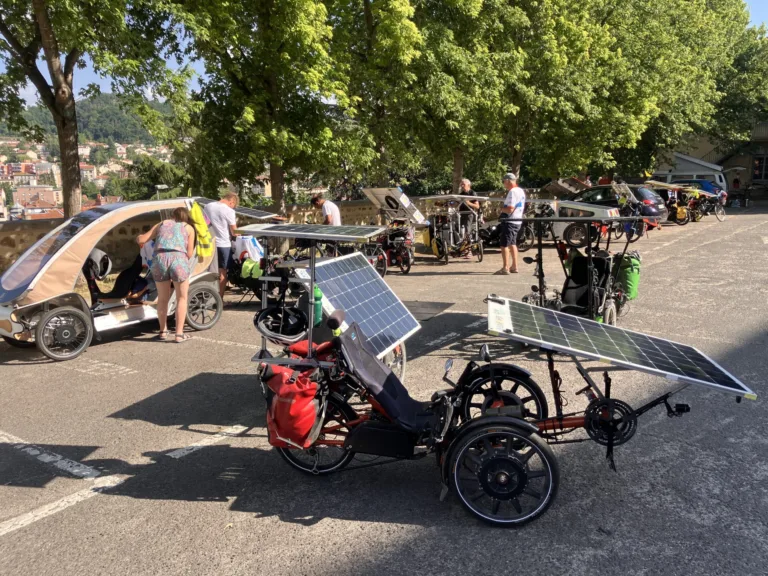
Pair it with a foldable panel and you have a mobile solar camp. For trips with long breaks it is hard to beat – just like the camping setups in our solar trike collection.