As soon as you have more than one solar panel, you have to choose: series or parallel? The choice changes the voltage and current your controller sees, how the system copes with shade and how thick your cables must be.
The basics
- Series: voltages add up, the current stays the same.
- Parallel: currents add up, the voltage stays the same.
Two identical panels give the same power either way – but at very different voltages and currents. Where those numbers come from: reading a datasheet.
Series – the pros and the catch
Higher voltage means less current and thinner cables, and it lets a normal buck MPPT controller charge a 36 V or 48 V battery. The catch: the weakest panel sets the pace for all. One shaded panel can pull down the whole string – see partial shading.
Parallel – the pros and the catch
Every panel works on its own, which is ideal when panels face different directions, as on a curved trike roof. Parallel panels pair naturally with a boost controller. The catch: currents add up, so cables, connectors and fuses must handle more.
Typical setups
- E-bike with one or two small panels: usually parallel with a boost controller.
- Flat trailer or camper roof: often series with a buck controller.
- Trike with panels facing different ways: separate strings or controllers.
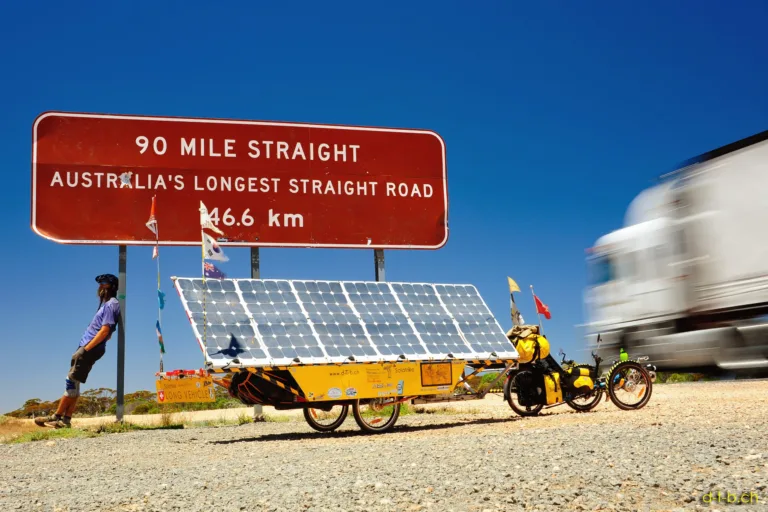
Before you connect anything, check cables, fuses and connectors in our wiring guide, and look at how solar trikes like the Solatrike II solved it.