“How far can I ride on sunshine?” Every solar rider asks it. The answer comes from two numbers: how much energy you have and how much you use per kilometre.
Number one: energy
Your daily energy is the battery’s usable capacity plus what the sun adds that day. The solar part depends on panel size, season, weather and angle – see how many watts of solar you need. Capacity is explained in Wh, Ah and volts.
Number two: consumption
A typical pedelec uses roughly 7–15 Wh per kilometre. What pushes it up or down:
- Assist level and speed – the biggest lever you control.
- Hills and headwind.
- Weight – rider, luggage, trailer and panels.
- Tyres and pressure – rolling resistance adds up over a day.
- Temperature – cold reduces battery capacity.
A quick example
A 500 Wh battery plus a summer day’s 600 Wh from 200 W of panels makes about 1,100 Wh. At 10 Wh/km that is roughly 110 km with assistance. In spring and autumn the solar share shrinks noticeably, and in winter it becomes a small bonus.
The mindset that makes it work
Solar riders think in daily budgets: ride a little more economically in the morning, charge at lunch in the sun, and the battery is rarely empty. That is what independence from sockets really means.
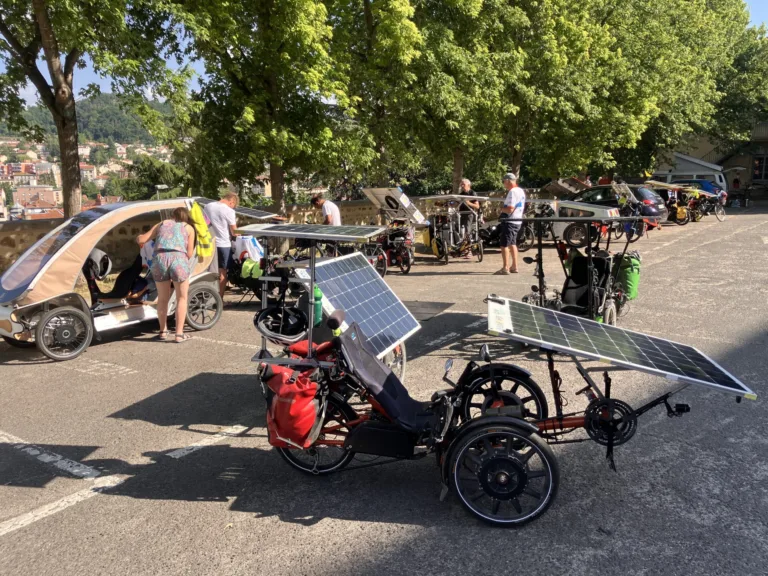
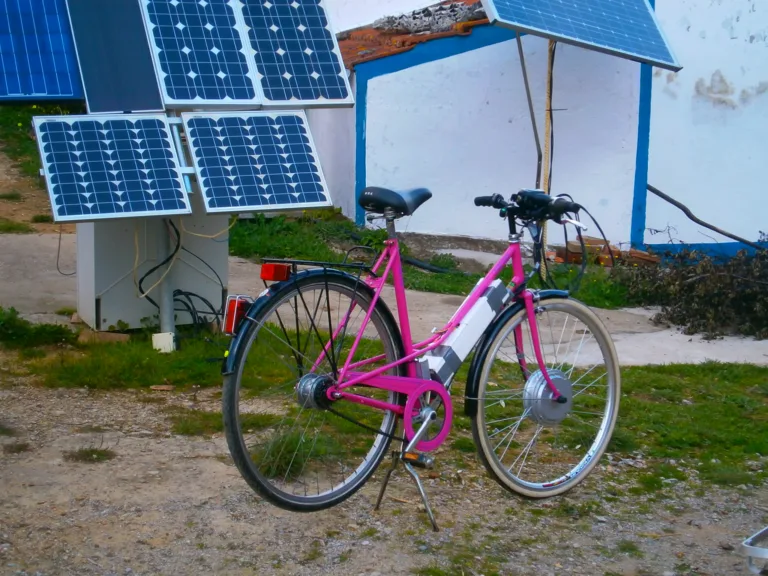
The Sun Trip shows how far this goes, and our solar e-bikes and solar trikes show many everyday versions. Before a long tour, check the pedelec rules too.