
Last autumn we asked how close perovskite solar cells are to powering your ride. The answer keeps getting closer. On 14 July 2026, LONGi announced a crystalline silicon-perovskite tandem cell with a certified efficiency of 35.5%, verified by the European Solar Test Installation (ESTI).
A rapid run of records
- 34.85% – LONGi’s previous record, April 2025
- 35.2% – May 2026, listed in the Solar Cell Efficiency Tables
- 35.5% – July 2026
LONGi also reported 34.3% on a large 261 cm² cell and certified tandem module efficiencies of 31.4% and 29.4%. JinkoSolar is close behind with 34.82%.
Why tandems beat silicon’s limit
A single-junction silicon cell can never exceed about 33.7% (the Shockley–Queisser limit), and the best commercial panels today sit around 22–25%. A tandem stacks a perovskite layer, which harvests the blue end of the spectrum, on top of silicon, which takes the red. The theoretical limit for this combination is around 43%.
What it means for solar mobility
On a house roof, a few percent of efficiency is nice to have. On a vehicle, it is everything, because the area is fixed. Take a 1 m² panel on a cargo bike or trike roof:
- at 22%: roughly 220 W peak
- at 30%: roughly 300 W peak, over a third more energy from the same space
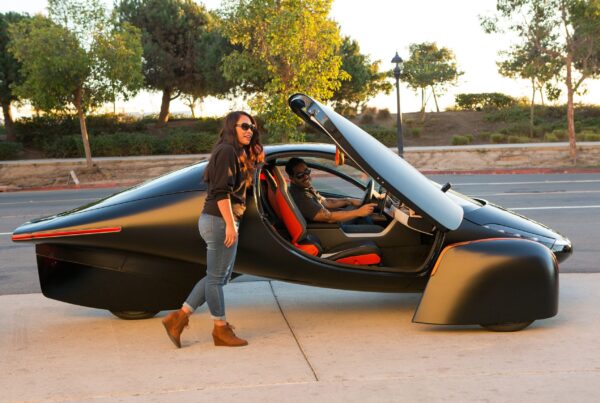
For solar cars like Aptera or the Lightyear 0, that could mean many extra free kilometres every sunny day. The open questions remain durability (heat, humidity and UV) and price. The first commercial tandem modules are only just reaching the market, so expect them on roofs before they reach your handlebars.
Sources: LONGi · pv magazine (JinkoSolar)
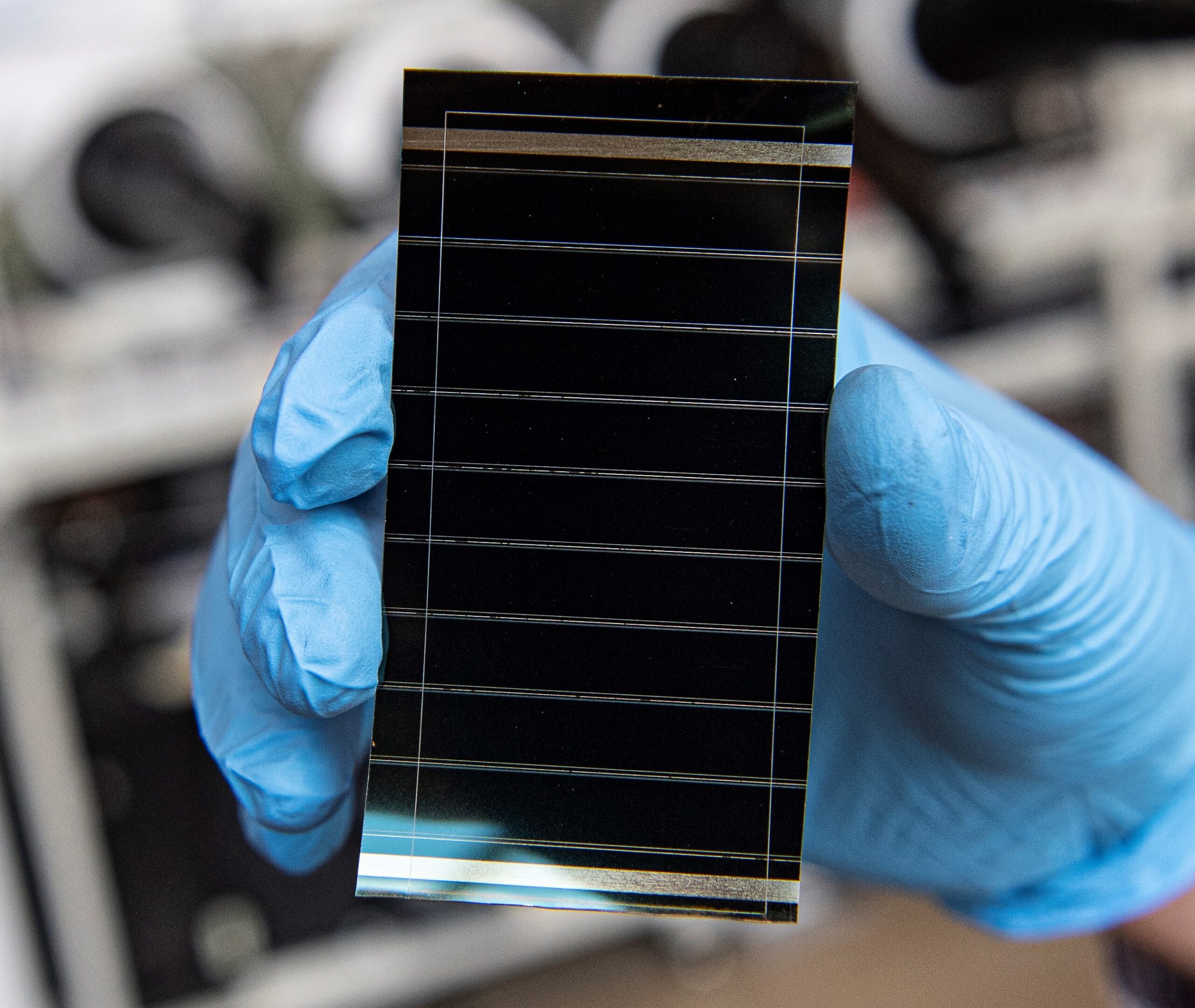
Photo (Perovskite solar cell at the U.S. National Renewable Energy Laboratory): Dennis Schroeder / National Renewable Energy Laboratory / Wikimedia Commons, Public domain