
Walk through the builds on Solar-Mobility and one battery type keeps showing up: LiFePO4, or lithium iron phosphate (LFP). From the 72 V pack in the Solarcamper to off-grid e-bike projects, it has become the favourite chemistry of solar builders. Here is why, and what to watch out for.
The advantages
- Long life. Quality LFP cells are commonly rated for 2,000 to 5,000+ cycles, several times more than typical NMC e-bike cells.
- Thermal stability. The iron-phosphate cathode is far less prone to thermal runaway than nickel-based chemistries, a big plus for packs that sit in the sun.
- No cobalt or nickel, and prices that keep falling: BloombergNEF put the average LFP pack at $81/kWh in 2025.
- Solar-friendly. LFP happily accepts the irregular charging that comes from clouds and changing sun angles.
The trade-offs
- Weight. LFP stores less energy per kilogram than NMC, so a pack with the same capacity is heavier. That matters on a lightweight bike, much less on a trailer or camper.
- No charging below 0 °C. Charging LFP cells below freezing can damage them permanently. Use a BMS with low-temperature protection or keep the pack warm in winter.
- A very flat voltage curve. It makes estimating the state of charge from voltage alone unreliable. A shunt-based battery monitor helps.
Voltages at a glance
An LFP cell has a nominal voltage of 3.2 V and is fully charged at about 3.65 V. That gives these common configurations:
- 4S – 12.8 V nominal (camper and “12 V” systems)
- 8S – 25.6 V nominal (“24 V” systems)
- 13S – 41.6 V nominal, a close match for many “36 V” e-bike controllers
- 16S – 51.2 V nominal, the usual “48 V” LFP pack
Always set your solar charge controller to an LFP charging profile with the correct absorption voltage. Never use a lead-acid profile, and always pair the pack with a BMS that balances the cells.
Our take
If weight is not your top priority (cargo bikes, trikes, trailers, campers), LiFePO4 is hard to beat. For ultralight touring bikes, NMC still has the edge, at least until sodium-ion and solid-state cells mature.
Sources: BloombergNEF · Tritek · Letrigo
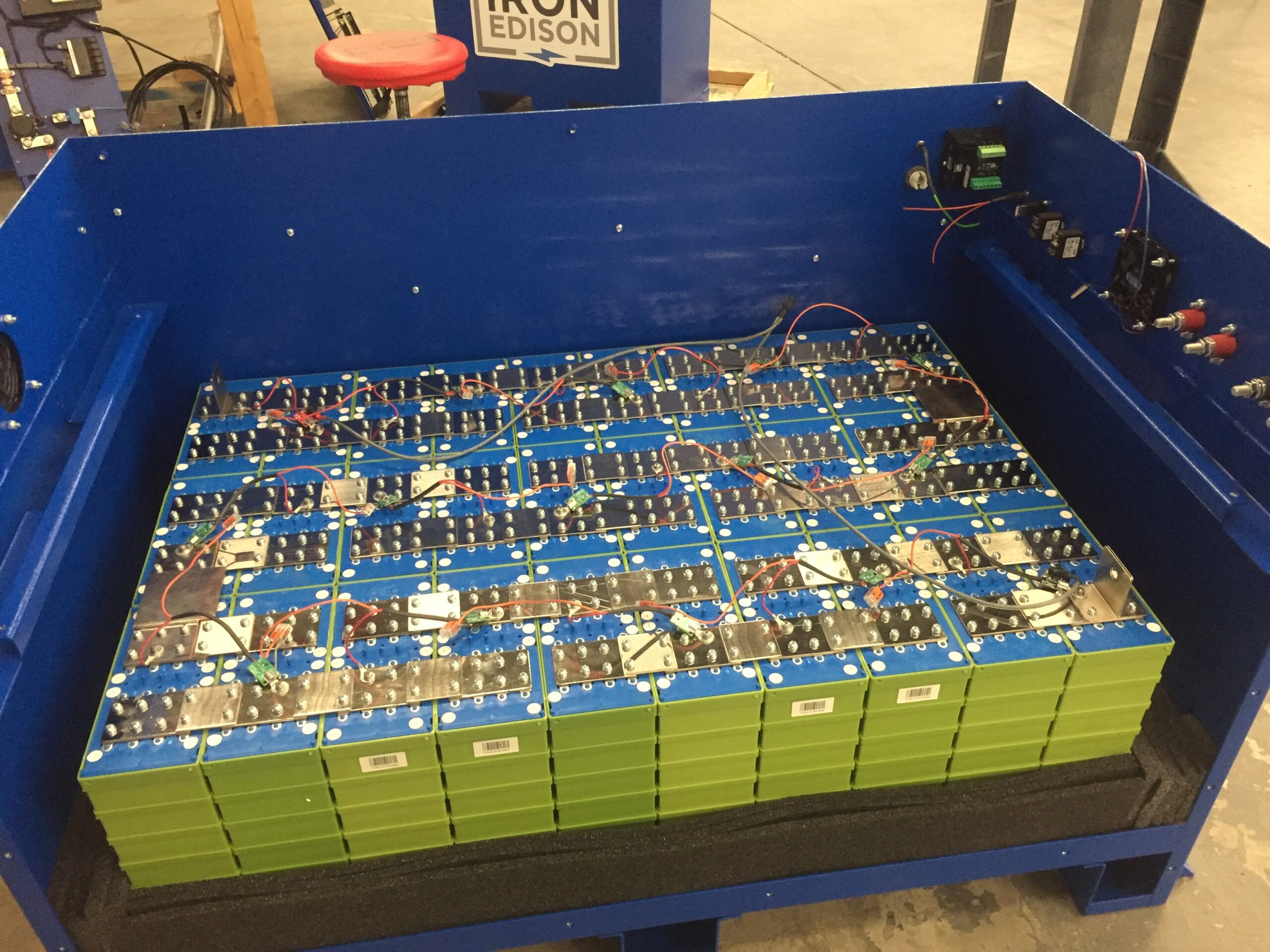
Photo (LiFePO4 cells wired into a large battery bank): Yo-Co-Man / Wikimedia Commons, CC BY-SA 4.0