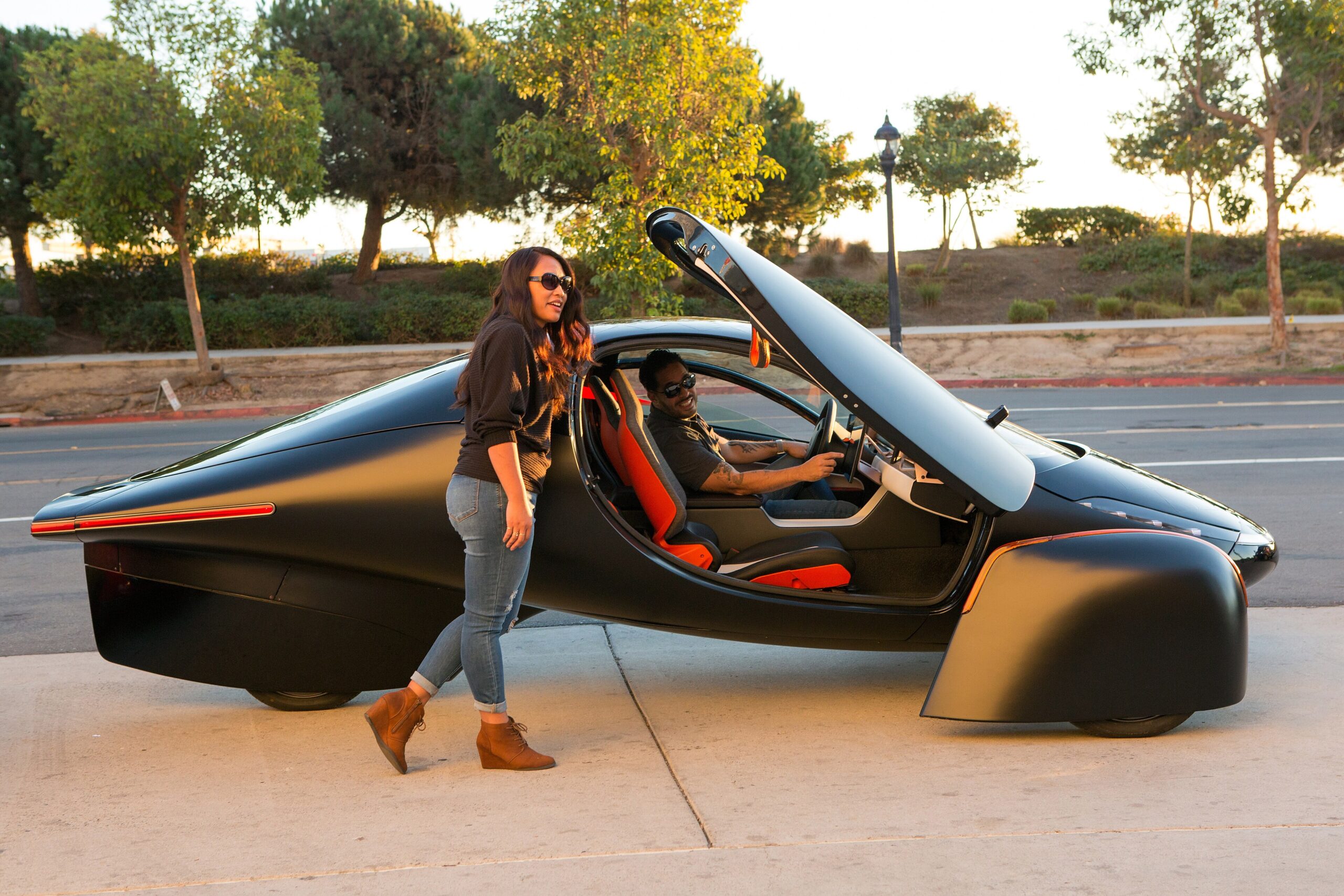
Few solar vehicles have been followed as closely as Aptera, the three-wheeled, two-seat electric car with solar cells built into its body. 2026 has been a year of real progress, and of familiar money worries.
What happened this year
- May 2026 – the first five validation vehicles drove off Aptera’s low-volume assembly line in Carlsbad, California.
- June 2026 – real-world testing showed more than 4 kWh of solar generation per day, above the company’s internal target. Aptera says up to 4.75 kWh is possible on sunny days, worth roughly 40 miles of driving.
- 18 June 2026 – the U.S. EPA issued a Certificate of Conformity for the 2026 Aptera Launch Edition, one of the two main federal approvals needed before sale.
The funding question
On 1 October 2026, Aptera (listed on Nasdaq as SEV) said it now needs about $25 million to start production, down from an earlier estimate of $40–45 million. The plan: build the first 40 production vehicles by the end of 2026 and begin customer deliveries in early 2027, subject to financing. The stock fell about 15% on the news. Aptera reported around 49,300 reservations.
Our take
The engineering story is strong: certification and measured solar yields are exactly what sceptics asked for. 40 miles of free sunshine a day covers the daily commute of most drivers. Whether Aptera becomes the first mass-produced solar car now depends on capital, not on physics. We will keep following it, and we hope to add a customer car to our project list in 2027.
Sources: Electrek (Oct 2026) · Electrek (Jan 2026) · Wikipedia
Photo (Aptera solar electric vehicle): ApteraMotorsMedia / Wikimedia Commons, CC BY-SA 4.0