Solid-state batteries promise more range, faster charging and better safety by replacing the liquid electrolyte with a solid one. For years they were always “five years away”. In 2026 the first pilot lines are running, and real cells are being tested in real vehicles.
QuantumScape opens the Eagle Line
On 4 February 2026, QuantumScape inaugurated its Eagle Line pilot production facility, built around its “Cobra” process for making the ceramic separator at the heart of its lithium-metal cells. Its QSE-5 cells have been shipped to Volkswagen’s battery company PowerCo, and in September 2025 they powered a Ducati V21L race motorcycle at IAA Mobility in Munich, the first public demonstration of the technology in a vehicle. QuantumScape’s 2026 goal: prove that the Eagle Line can scale.
China: first all-solid-state cells off the line
In April 2026, Greater Bay Technology, backed by carmaker GAC, announced its first A-sample all-solid-state cells, which passed safety tests without catching fire. The company quotes 260 to 500 Wh/kg per cell and aims for GWh-scale production. GAC itself plans to ramp up mass production between 2027 and 2030.
Mercedes: 1,205 km on one charge
Mercedes-Benz and Factorial Energy have been road-testing an EQS fitted with lithium-metal solid-state cells. In September 2025 the prototype drove 1,205 km from Stuttgart to Malmö on a single charge.
What it means for solar mobility
For solar vehicles, energy density is everything: lighter batteries mean less weight to push up every hill on sunshine alone. But early solid-state cells will go to cars and premium motorcycles first, and they will be expensive. For e-bikes, trikes and DIY builds, LFP and sodium-ion remain the practical choice for the next few years. Keep an eye on the race bikes, though: two-wheelers are where light, powerful packs pay off the most.
Sources: QuantumScape shareholder letter · Electrek · Battery Design
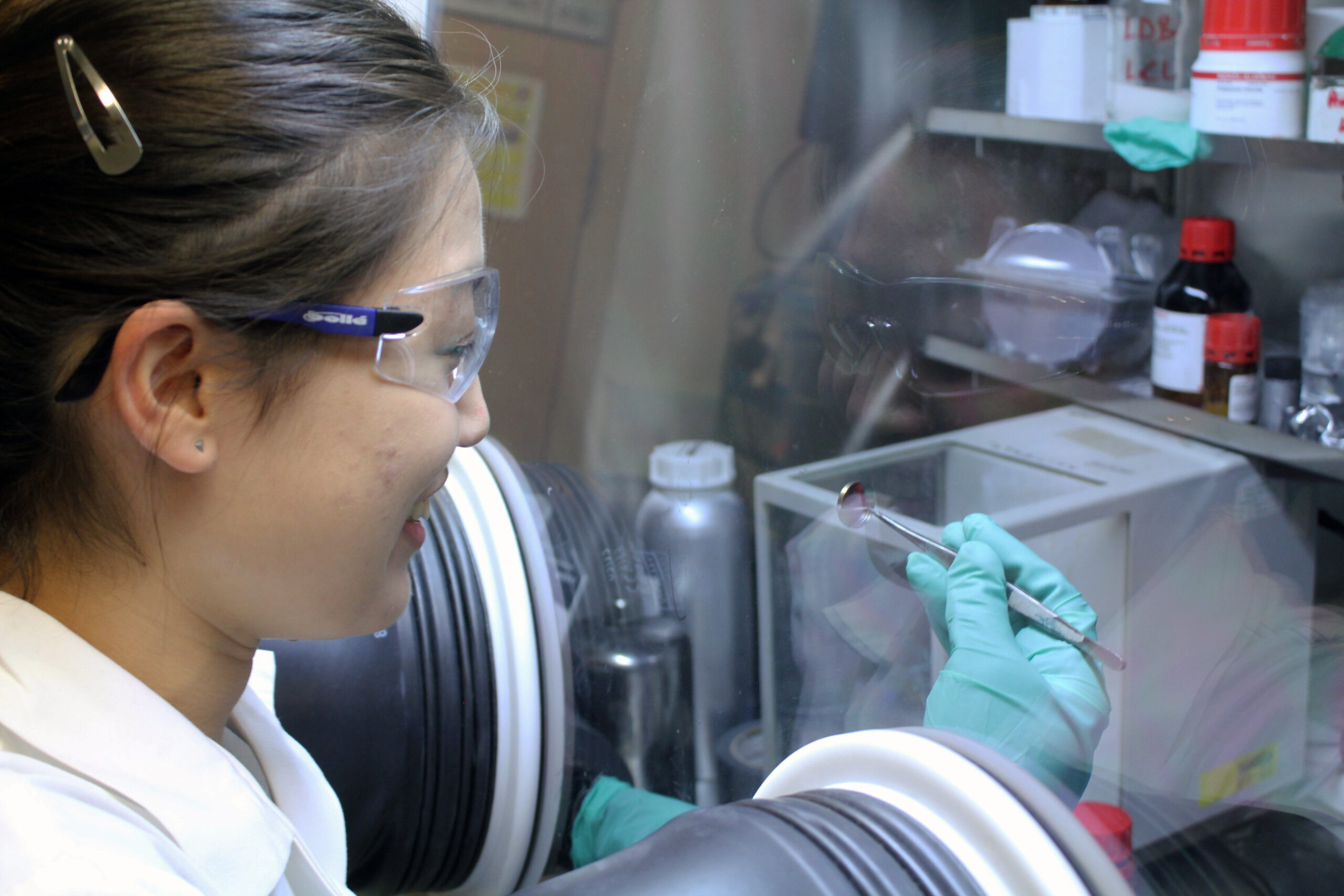
Photo (Battery research in a glovebox at University College London): UCL Mathematical & Physical Sciences from London, UK / Wikimedia Commons, CC BY 2.0