
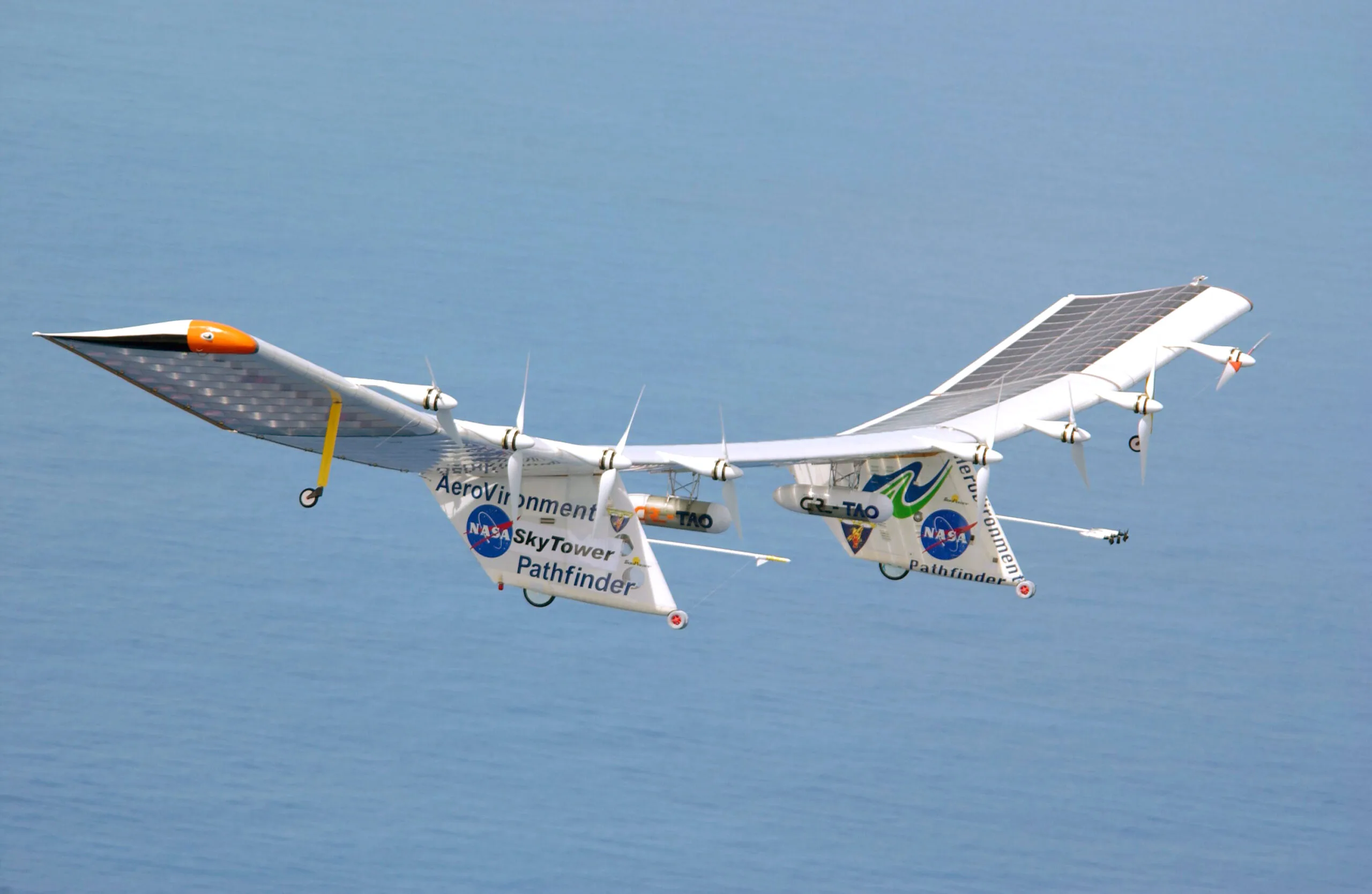
NASA’s dream of a solar aircraft that could fly for months like a satellite was developed step by step. Pathfinder-Plus was the second step, between the original Pathfinder and the giant Helios.
Built by AeroVironment for NASA’s ERAST program, Pathfinder-Plus took the original Pathfinder and added a new, longer centre wing section. That stretched the wingspan to 36.3 m (121 ft) and increased the motors from six to eight. The new section carried high-efficiency silicon solar cells from SunPower, raising total solar output to about 12.5 kW. Fully loaded the aircraft weighed only about 315 kg.
On 6 August 1998, flying remotely from the US Navy’s Pacific Missile Range Facility on Kauai, Hawaii, Pathfinder-Plus climbed to 80,201 ft (24,445 m). That was a world altitude record for solar-powered and propeller-driven aircraft at the time.
The lessons from Pathfinder-Plus went straight into Centurion and Helios, which pushed the record above 29 km in 2001.
Technical data
| Builder | AeroVironment for NASA ERAST |
|---|---|
| Type | Unmanned solar-electric flying wing |
| Wingspan | 36.3 m (121 ft) |
| Motors | 8 electric motors |
| Solar | ~12.5 kW, incl. SunPower silicon cells on the new centre section |
| Max weight | ~315 kg (700 lb) |
| Record | 80,201 ft (24,445 m), 6 August 1998, Kauai |
Photo (NASA / Nick Galante): NASA/Nick Galante / Wikimedia Commons, Public domain
Sources: Wikipedia: NASA Pathfinder